
Last updated November 15, 2026
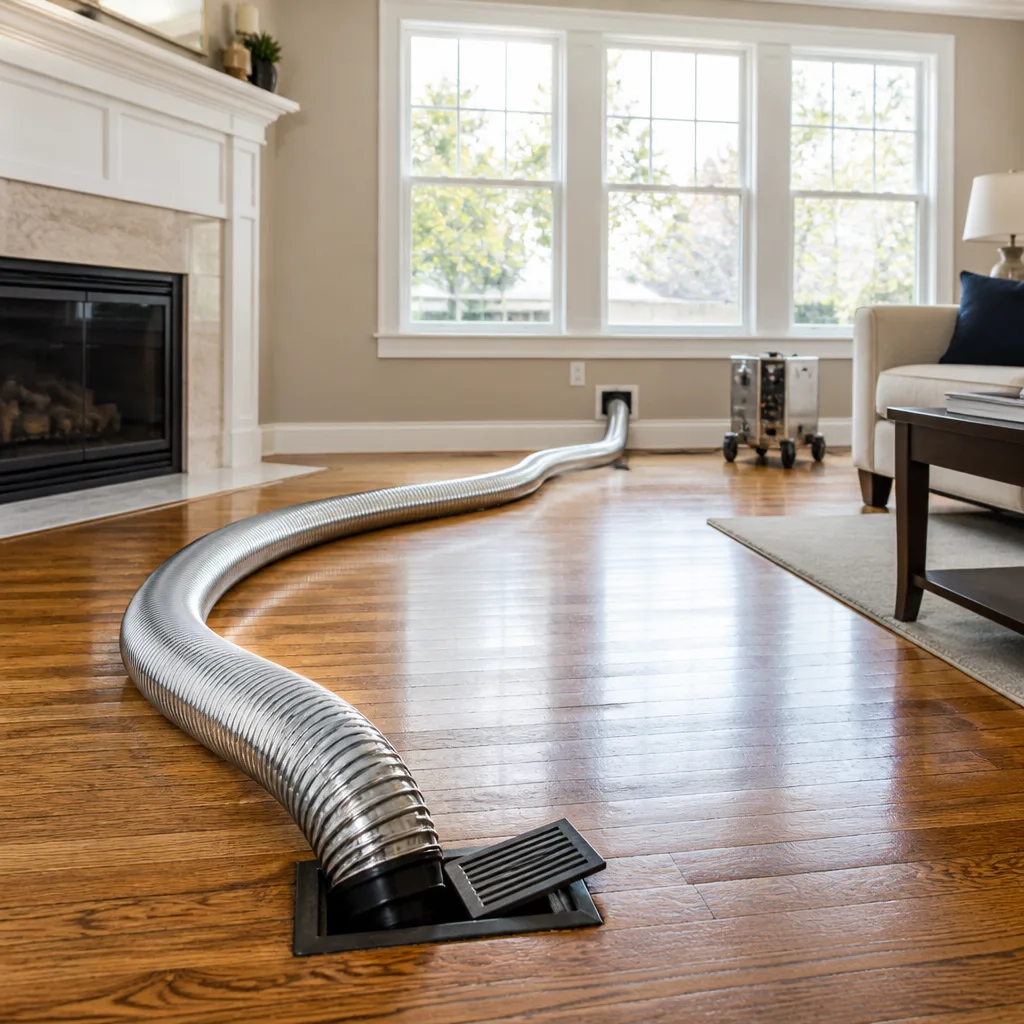 Whole-home duct cleaning
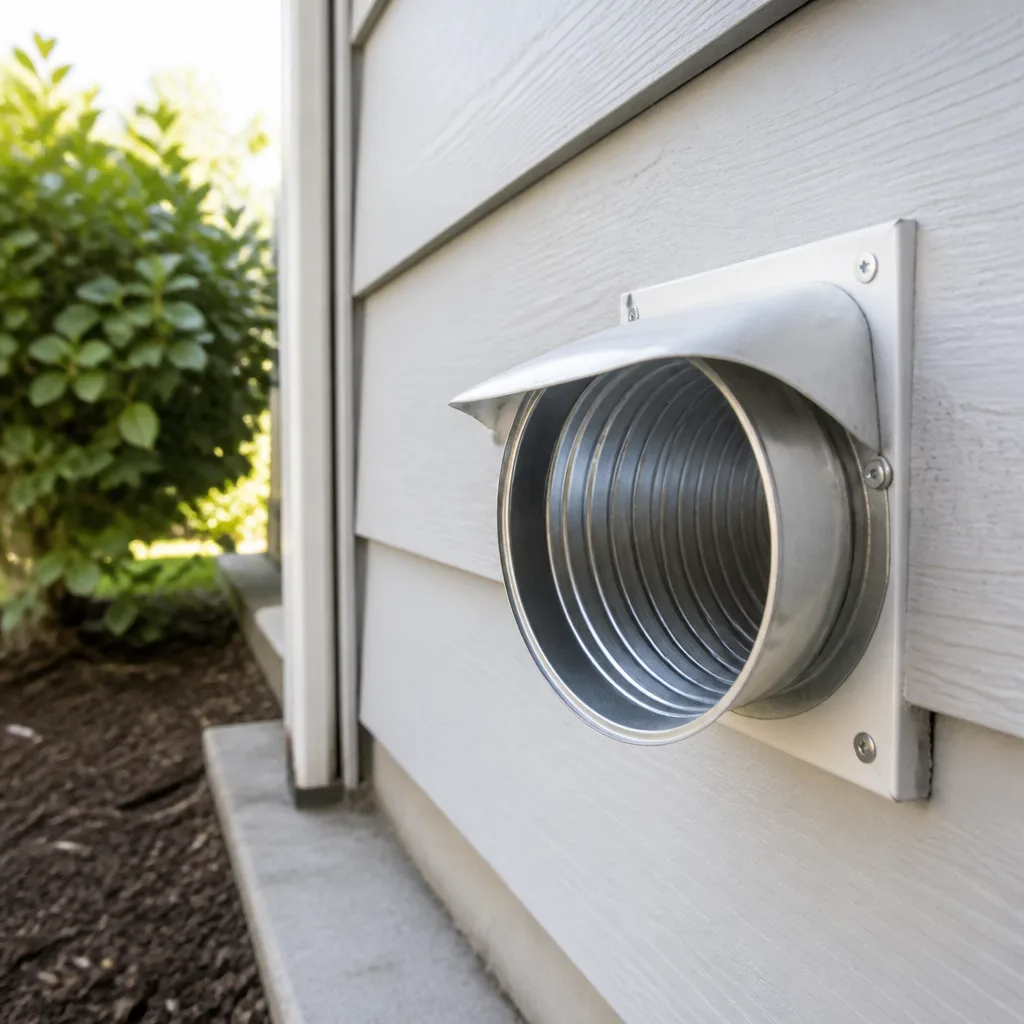 Dryer vent cleaning
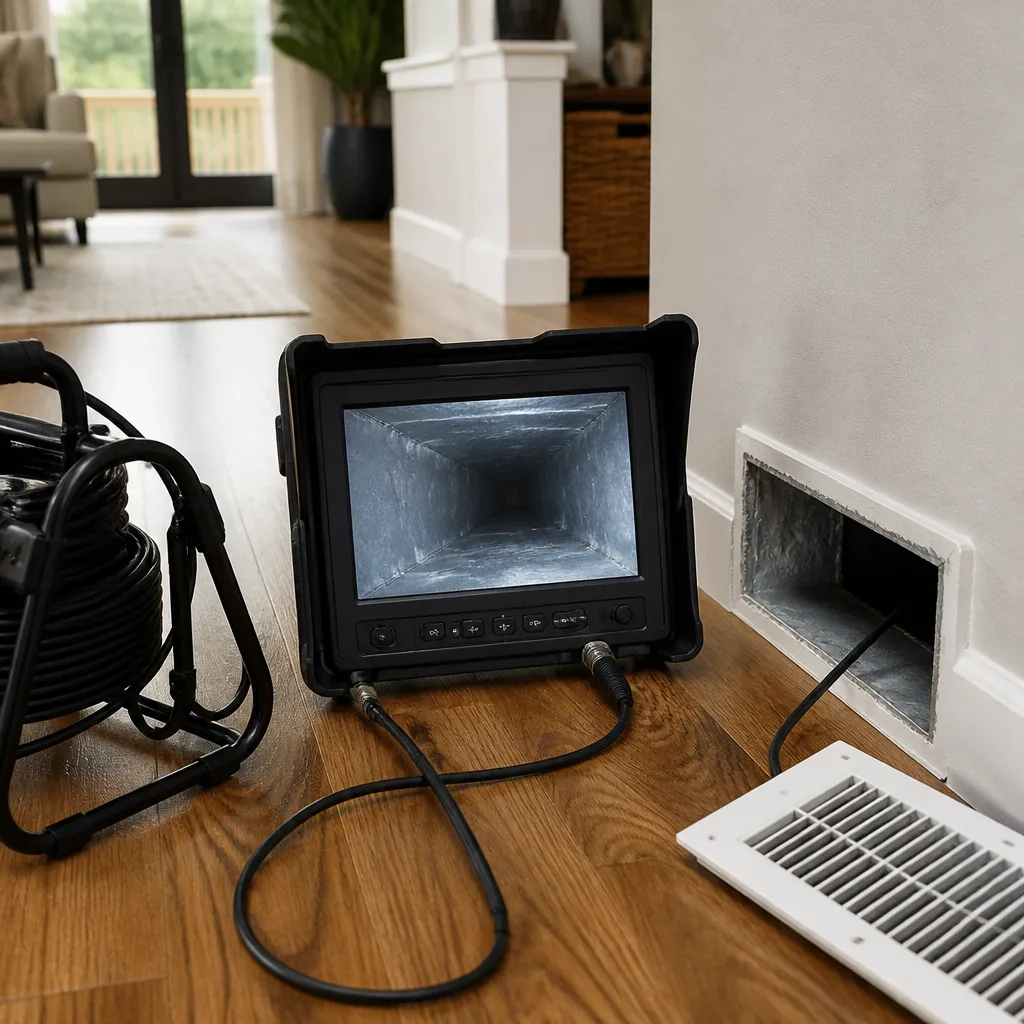 Camera inspection
 Sanitizing & deodorizing
Whole-system duct and dryer vent check with before-and-after photos - you see exactly what came out of your vents
That "$99 whole-house special" is a bait ad - the real number appears once they are in your hallway, or the "clean" is a shop-vac at the register. We photograph the inside of your ducts before and after instead.
How to Hire an Air Duct Cleaning Contractor in Jersey City: A Step-by-Step Guide
New Jersey has almost no barrier to entry for duct cleaning. Anyone with a van, a phone number and a shop vac can print “contractor” on a business card and knock on doors in Jersey City. That’s the uncomfortable truth behind every bargain coupon you’ll see this month. The work isn’t regulated the way electrical or plumbing work is, which means the hiring decision lands on you, not on a licensing board. This guide gives you the technical questions, equipment benchmarks and quote structure that separate working specialists from one-day outfits. You’ll learn what a real quote includes, what a legitimate pre-job walkthrough looks like, and how to compare two bids on scope rather than price alone.
Quick Answer
To hire an air duct cleaning contractor in Jersey City, verify three things before anyone enters your home: the equipment they use (ask for Rotobrush or Nikro by name), proof of NADCA membership or equivalent training, and a written quote that itemizes each system rather than a single flat number. Ask for before-and-after photos of your own ducts as a deliverable, not a favor. If a contractor can’t answer equipment questions on the phone, they aren’t the right fit.
Styles & brands we work with
- Whole-home duct cleaning
- Dryer vent cleaning
- Camera inspection
- Sanitizing & deodorizing
Table of Contents
- Why Duct Cleaning Is Different in Jersey City
- The Three Equipment Questions to Ask Before Anyone Enters Your Home
- NADCA Membership: A Minimum Threshold, Not a Guarantee
- How to Structure a Quote Comparison So You’re Comparing Scope, Not Price
- What a Legitimate Pre-Job Walkthrough Looks Like
- New Jersey Licensing Context: What’s Required and What’s Voluntary
- A Step-by-Step Hiring Checklist
- Common Mistakes to Avoid
Why Duct Cleaning Is Different in Jersey City
In a market like Jersey City, air duct cleaning sits in an unusual spot: high demand, low regulation, and a customer base that’s often renting or buying in older multi-unit buildings where ductwork was retrofitted years after the structure was built. Downtown high-rises along the waterfront have central systems that were designed into the building. Two- and three-family homes in the Heights and Greenville often have flexible duct runs added later, sometimes with sharp turns and undersized returns that collect debris faster than a well-designed system would.
That geography matters for hiring. A contractor who only works suburban single-family homes may not have encountered the tight closet-mounted air handlers common in Jersey City row houses, or the shared return plenums in converted brownstones. The right contractor should be able to look at your specific setup and tell you, before quoting, how they’ll access each component.
The climate adds a second layer. Jersey City summers are humid, and air conditioning systems that run hard for three months pull moisture through ductwork that may not drain well. That moisture combined with dust becomes the conditions for microbial growth, which is a different cleaning problem than dry dust accumulation. Ask any contractor how they handle a system that’s been running wet. A shop-vac-and-a-brush operation won’t have an answer.
None of this means Jersey City homes need more cleaning than anywhere else. It means the buildings here have specific access and moisture patterns that a generalist won’t have thought about. If you’re comparing quotes, ask each contractor to describe what they expect to find in a building like yours. The one who asks follow-up questions before quoting is the one who has done this work in this market.
The Three Equipment Questions to Ask Before Anyone Enters Your Home
This is the section that will save you the most money and the most trouble. Equipment is the single most revealing piece of information about a duct cleaning contractor, and it’s the one thing you can verify before anyone sets foot in your home. Ask these three questions on the phone.
- What cleaning system do you use, and who makes it? The correct answer names a professional-grade system. Rotobrush is the industry-standard rotary-brush system used by certified duct cleaning professionals; Nikro is a recognized name in professional HVAC cleaning equipment. If the answer is “a big vacuum” or “a special machine,” press for a brand. A contractor who can’t name the equipment they use probably doesn’t know what’s in their own van.
- How do you contain dust during the job? The right answer involves negative-air containment equipment. Abatement Technologies machines are the same category of equipment used in professional remediation work, and they keep debris out of your living space while the cleaning happens. A contractor who doesn’t use containment will leave a fine layer of dust on every surface in the room.
- Do you inspect the ducts before and after, and will I see the photos? The correct answer is yes, with photos as a deliverable. Before-and-after documentation of your own system is the difference between a job described over the phone and a job you can actually verify happened.
None of those questions require technical knowledge to ask, and none require technical knowledge to evaluate the answer. If a contractor stumbles on all three, you have your answer about whether they’re the right fit. If they answer all three and then ask you questions about your home’s system, you’re on the right track.
We use Rotobrush and Nikro systems for cleaning, Abatement Technologies equipment for containment, and Guardsman-grade products in the cleaning process. That’s not a sales pitch, it’s the benchmark we’re suggesting you hold every contractor to. The brands professionals trust are easy to name, and hard to fake if you don’t actually own them.
NADCA Membership: A Minimum Threshold, Not a Guarantee
The National Air Duct Cleaners Association (NADCA) is the closest thing the duct cleaning industry has to a formal standard. NADCA membership is voluntary, but it’s the single most useful filter you have, because it requires the contractor to have met some baseline of training, insurance and adherence to a published code of ethics. It’s not a guarantee of quality. It is, however, a meaningful minimum threshold, and a contractor who can’t clear it isn’t worth the call.
Verifying NADCA membership takes about 60 seconds. Here’s how:
- Ask the contractor for their NADCA member number and the exact company name on the membership. Membership is tied to a business entity, not to an individual, so the name should match what’s on the quote.
- Go to NADCA’s public member directory online and search the company name and city. The directory is searchable without an account.
- If the company name doesn’t appear, ask whether they hold an individual certification through NADCA instead. Certifications such as the Air Systems Cleaning Specialist credential attach to a person. That’s acceptable, but the technician who actually does the work should be the one holding it.
- Cross-check the address listed. A member listing with a PO box and no physical base of operations is worth a second question about where they’re actually working from.
The trap here is treating NADCA membership as a final answer. It isn’t. A company can hold membership and still do mediocre work, and a smaller operator without membership can still do excellent work. What NADCA membership does is eliminate the outfits that couldn’t be bothered, or that wouldn’t pass the insurance requirement. For a Jersey City homeowner choosing between three quotes, that’s a meaningful first cut.
For more on what to expect from a properly scoped cleaning job, see air duct cleaning in Jersey City.
How to Structure a Quote Comparison So You’re Comparing Scope, Not Price
The single biggest mistake Jersey City homeowners make when hiring is comparing two quotes by their totals. A $300 quote and a $700 quote can describe entirely different jobs. One might cover one system, the other three. One might include repair of damaged sections, the other might leave them. Here’s how to line up two or three quotes so the comparison is honest.
Ask each contractor to break the quote into line items. The minimum an itemized quote should show:
- Supply and return duct cleaning as a separate line from the air handler and blower motor cleaning. These are different components and different work.
- Registers and grilles listed separately, with a count. This is where per-vent pricing creeps in, and you want to see it up front.
- Filter replacement listed as either included or excluded. If it’s excluded, ask why.
- Dryer vent cleaning listed as a separate line if offered. Dryer vents are a fire-safety item and belong on their own line, not buried in a bundle.
- Inspection and access work listed explicitly, with a description of what each access point covers. The most common hidden charge in this industry is an access fee that appears mid-job for a component that wasn’t in the original quote.
- Repair work identified in the inspection listed at itemized cost if any compromised sections are found. Not every job needs repair, but the quote should show you what happens if it does.
With three itemized quotes in front of you, the comparison becomes real. You’re no longer asking which number is smaller. You’re asking which quote covers the three systems your home actually has, and whether the lowest number is low because the scope is smaller. It usually is.
One more thing: ask each contractor to write a single flat price per system rather than a total. A quote that says “supply and return system: flat price, agreed before work starts” is easier to hold a contractor to than a single number you have to argue about later. Get it in writing.
What a Legitimate Pre-Job Walkthrough Looks Like
Before a contractor enters your home and starts cleaning, they should walk the system with you. Not glance at the registers and collect a fee. A legitimate walkthrough has a specific shape, and you’ll know within five minutes whether it’s happening.
Here’s what a real walkthrough involves:
- Locating the air handler. The contractor should identify where your air handler or furnace sits and how the return plenum connects to it. In Jersey City row houses and smaller multi-families, this is often in a closet or utility room, and access is part of the job. If the contractor doesn’t look at it, they haven’t actually scoped the job.
- Counting and opening registers. Every supply and return register should be visible during the walkthrough. The contractor should note the count and any register that’s blocked, painted over, or inaccessible. If they’re going to price per register, this is the moment the count gets locked in.
- Looking at the accessible ductwork. Wherever ducts run through a basement, closet, attic or chase, the contractor should inspect the visible sections for disconnect, damage, excessive debris, or microbial growth. That inspection is what tells them whether this is a cleaning job or a cleaning-and-repair job.
- Checking the dryer vent. Dryer vents are separate from HVAC ducts and are a genuine safety item. A legitimate contractor inspects the dryer vent run from the appliance connection through the wall or roof termination, and tells you whether it’s restricted.
- Discussing scope and access fees up front. If the walkthrough identifies work that needs an access fee, that fee should be discussed and agreed before cleaning starts. Not discovered mid-job.
- Writing the final scope. The contractor should confirm the scope in writing (or on the quote) after the walkthrough, before any cleaning begins.
A contractor who skips the walkthrough and starts collecting fees has skipped the step that tells them what work the job actually involves. That’s the pattern that leads to the mid-job surprise. If you see it, stop the job and ask for the scope in writing before anything else happens.
For a look at how a properly scoped dryer vent job differs from an HVAC duct job, see dryer vent cleaning in Jersey City.
New Jersey Licensing Context: What’s Required and What’s Voluntary
New Jersey does not license air duct cleaning as a standalone trade. This is the single most important thing to understand before you compare contractors. There is no state license exam, no state-issued credential, and no dedicated regulatory board for duct cleaning. That means a contractor who is not qualified can still be entirely legal, and a contractor who is qualified can still look indistinguishable on paper from one who isn’t.
What New Jersey does regulate:
- Electrical and gas work. If the job requires disconnecting or reconnecting electrical components, or touching any gas line, the contractor doing that work needs the appropriate licensing. Duct cleaning itself generally doesn’t, but the line is not always clean if the air handler needs to come apart.
- Home improvement contractor registration. Contractors doing home improvement work in New Jersey must be registered with the Division of Consumer Affairs, and should be able to show that registration. This isn’t a duct-cleaning-specific license, but it is a real consumer protection requirement and worth asking about.
- Lead-safe certification (where applicable). In homes built before lead paint was eliminated from use, contractors whose work may disturb painted surfaces generally need lead-safe practices. Older Jersey City housing stock is exactly where this matters.
What’s voluntary:
- NADCA membership and certifications. Discussed above. Not required, but a meaningful indicator.
- Industry equipment training. Rotobrush and Nikro both offer training and certification for their systems. A contractor who has invested in the equipment has typically also invested in the training.
- Insurance coverage. General liability and workers’ comp aren’t a license, but a contractor without either is a risk you’re carrying. Ask for a certificate of insurance and expect it in writing.
What absence of credentials actually signals: it signals that the contractor hasn’t invested in anything a board or a trade association would verify. That’s not automatically a deal-breaker, but it should shift the burden of proof to the contractor. Ask more questions, see more evidence, and don’t hand over money until the scope is specific and the equipment is named.
A Step-by-Step Hiring Checklist
This is the order we’d suggest for any Jersey City homeowner researching a duct cleaning contractor. It’s designed to eliminate weak bids early, so you’re not wasting a walkthrough on someone who was never going to make the cut.
- Start with equipment. Ask the three equipment questions from earlier on the phone. If the answers don’t name real professional systems (Rotobrush, Nikro, Abatement Technologies, or equivalent), move on. This eliminates most low-bid operators immediately.
- Verify NADCA membership. Ask for the member number and cross-check it in the public directory. Sixty seconds of your time.
- Request the certificate of insurance. General liability and, if they have employees, workers’ compensation. A contractor who can’t produce both within a day is not worth a walkthrough.
- Confirm the scope. Any contractor worth hiring will quote all three of your systems separately if you ask them to: the supply and return ductwork, the dryer vent, and the structural integrity of the ductwork itself. Single-service operators will quote only one.
- Book the walkthrough. Schedule a walkthrough and watch what happens. Count the registers they look at. Ask them to open the air handler closet. Confirm they inspect the dryer vent run.
- Get the itemized quote in writing. Including the flat price per system, the register count, the access fee description (if any), and the repair line items if repair is in scope.
- Confirm before-and-after photos. Get it in writing that photos of your own system will be provided. Look at them when the job is done.
- Hold the payment until the job is complete. Not a deposit before the equipment is out, not a payment before the walkthrough. Payment on completion with documentation is standard for legitimate work.
Our technicians have up to 10 years of experience, and they’ll walk you through this exact sequence on the phone before you ever book. If you’d rather skip the guessing, see Duct Cleaning Jersey City for the version of this process we run.
How Much Does Air Duct Cleaning Cost in Jersey City?
Air duct cleaning in Jersey City is priced per job, not per vent, and it’s quoted from the walkthrough rather than a coupon. The price depends on how many systems your home has (supply and return versus dryer vent versus both), how accessible the ductwork is, whether the inspection turns up compromised sections that need repair, and the size of the system. A contractor who quotes a single teaser number over the phone, before ever seeing the system, is quoting a job they haven’t actually scoped.
Ask for it this way: a flat price per system, in writing, agreed before work starts. That’s the number that matters. When you compare quotes that way, the comparison is real, and the surprise mid-job charge is eliminated by design.
The honest answer to why some quotes are much cheaper is that the scope is smaller. A cheaper quote usually covers fewer systems, skips the itemized accessories, or comes without inspection and documentation. Sometimes it also comes without the equipment that would actually clean the ducts to the standard the job deserves. Call (844) 834-2949 for an exact quote on your home. Estimates are free.
Common Mistakes to Avoid
- Comparing a teaser coupon against a legitimate quote. A bargain figure that appears before anyone has seen your system is not a quote; it’s a hook. Ask for a walkthrough and a written scope, and the comparison becomes meaningful.
- Skipping the equipment questions. If you don’t ask what equipment will be used, you’ll find out on the day when someone shows up with a shop vac. Four questions on the phone eliminate this entirely.
- Not verifying NADCA and insurance. Both are checkable within minutes. Contractors who are reluctant to provide either have given you an answer you should take seriously.
- Accepting a single flat total with no line items. Jersey City row house systems can be surprisingly complex, especially with later-added duct runs. A single total hides which systems are covered and which are not.
- Not asking about the dryer vent. Dryer vents are a separate safety item from HVAC ducts. If the contractor doesn’t inspect the dryer vent run as part of the walkthrough, that job is being left undone.
- Not asking for before-and-after photos. Photos of your own system are the difference between a job described over the phone and a job you can verify. Ask for them in writing, not as a favor.
- Paying in full before the work starts. Legitimate contractors don’t ask for this. Payment on completion with documentation is the standard you should hold for.
- Assuming a license requirement exists. New Jersey doesn’t license duct cleaning as a standalone trade, so “licensed” doesn’t mean what it does for electricians or plumbers. The real filters are equipment, membership, insurance and documentation.
See the difference
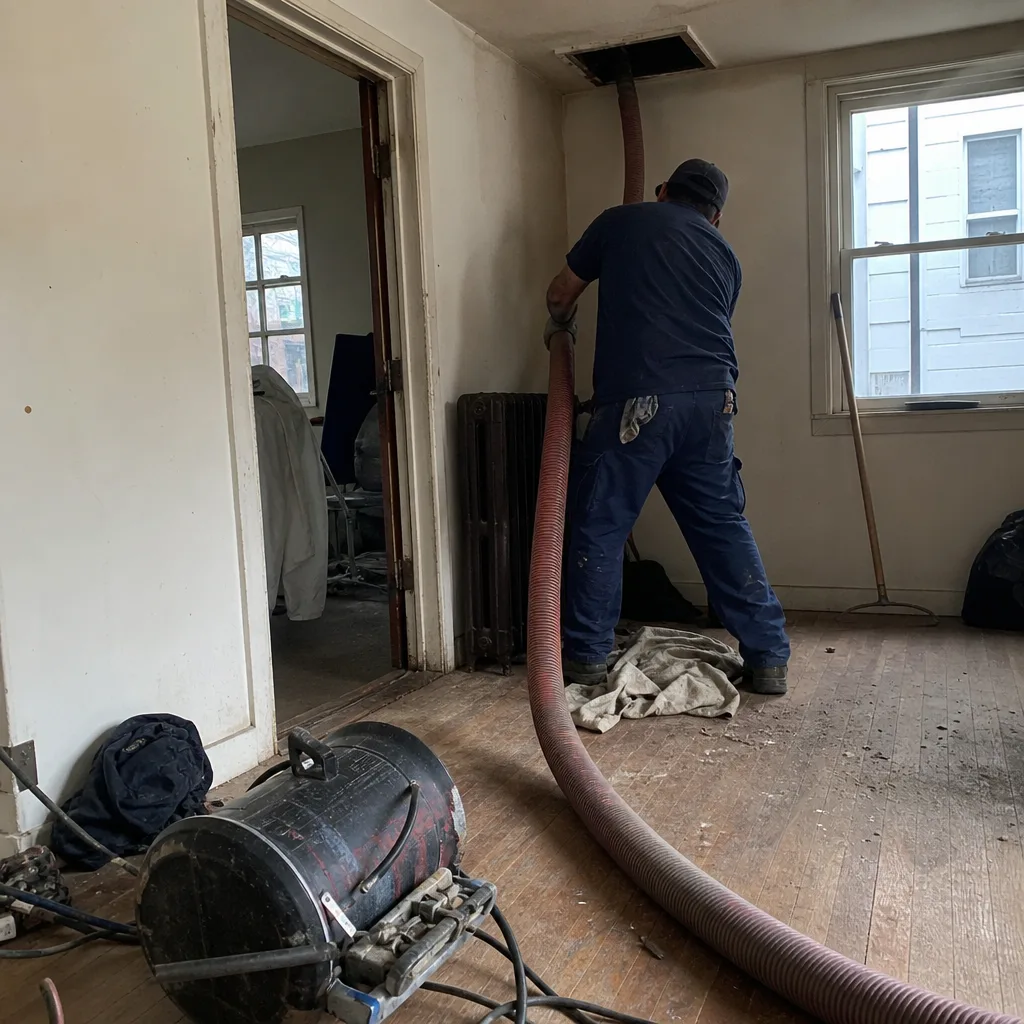 Before
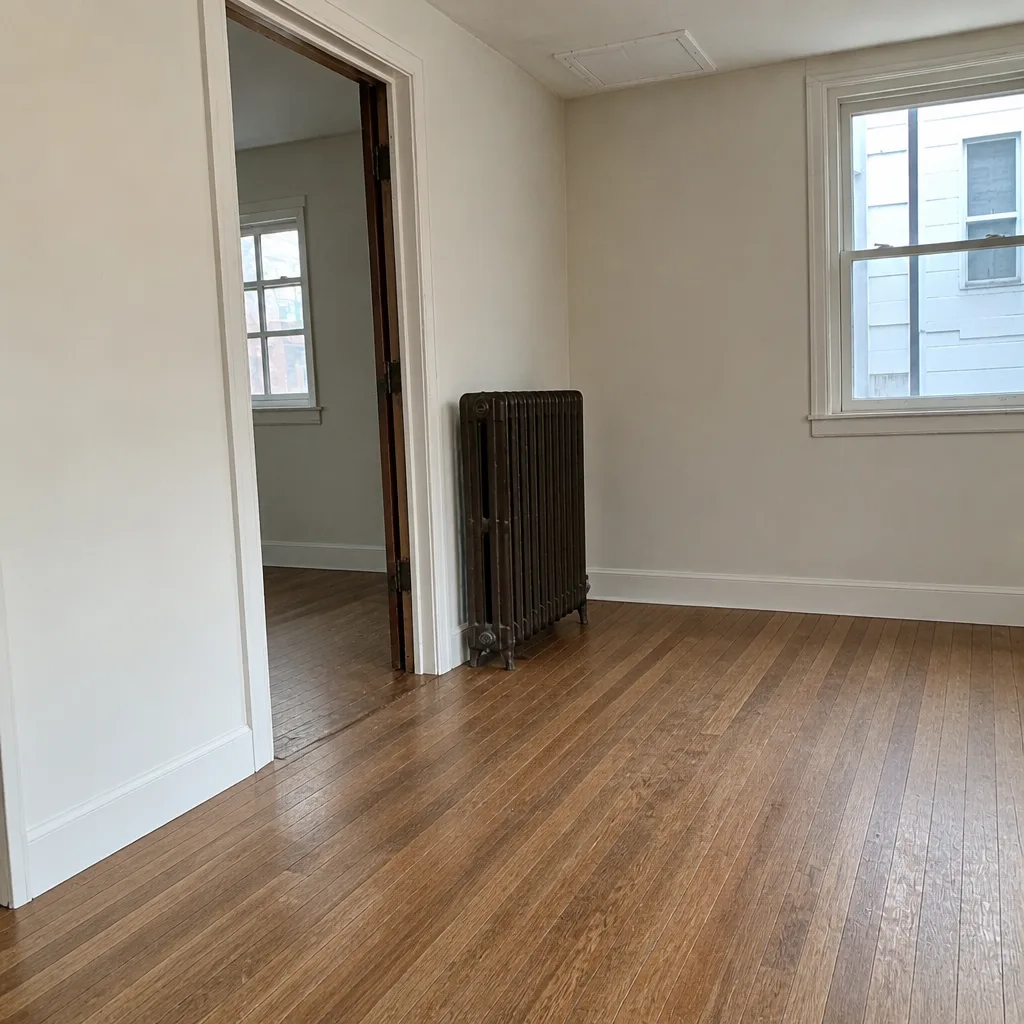 After
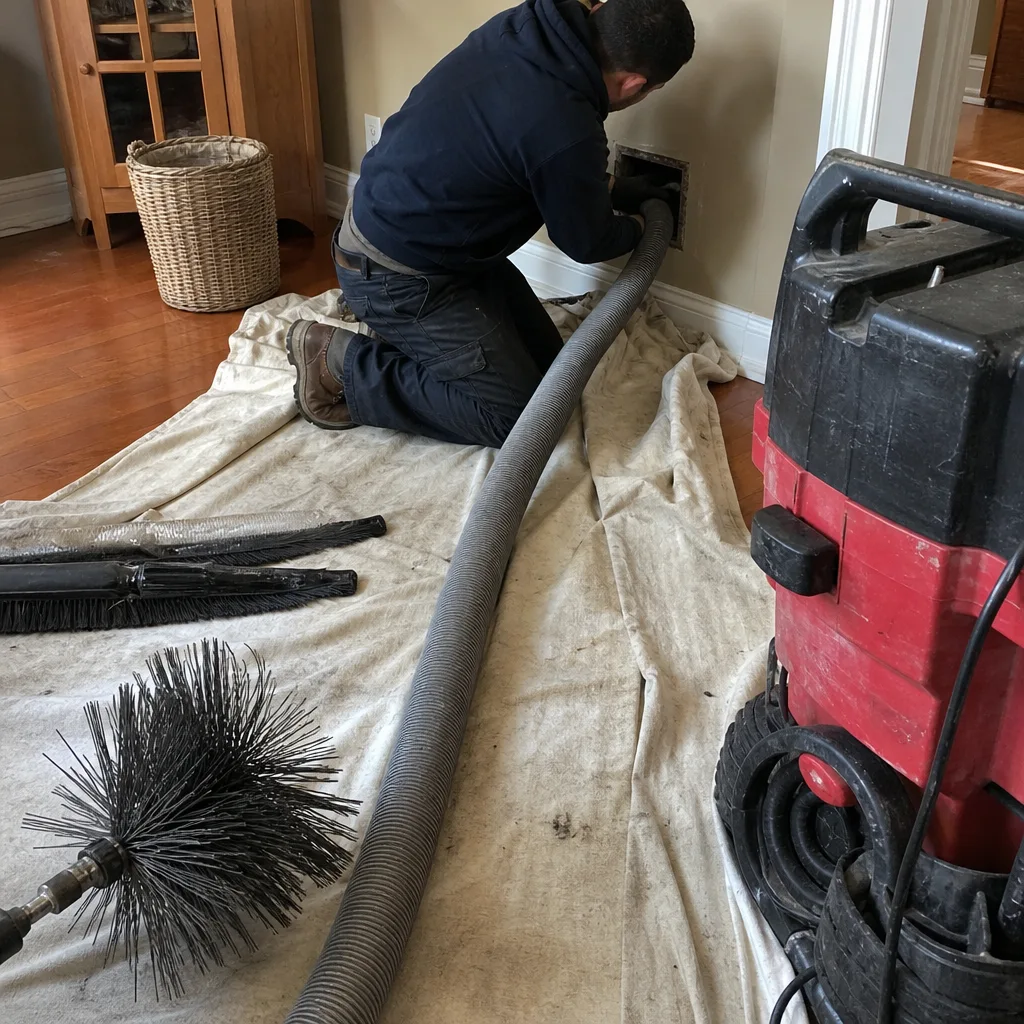 Before
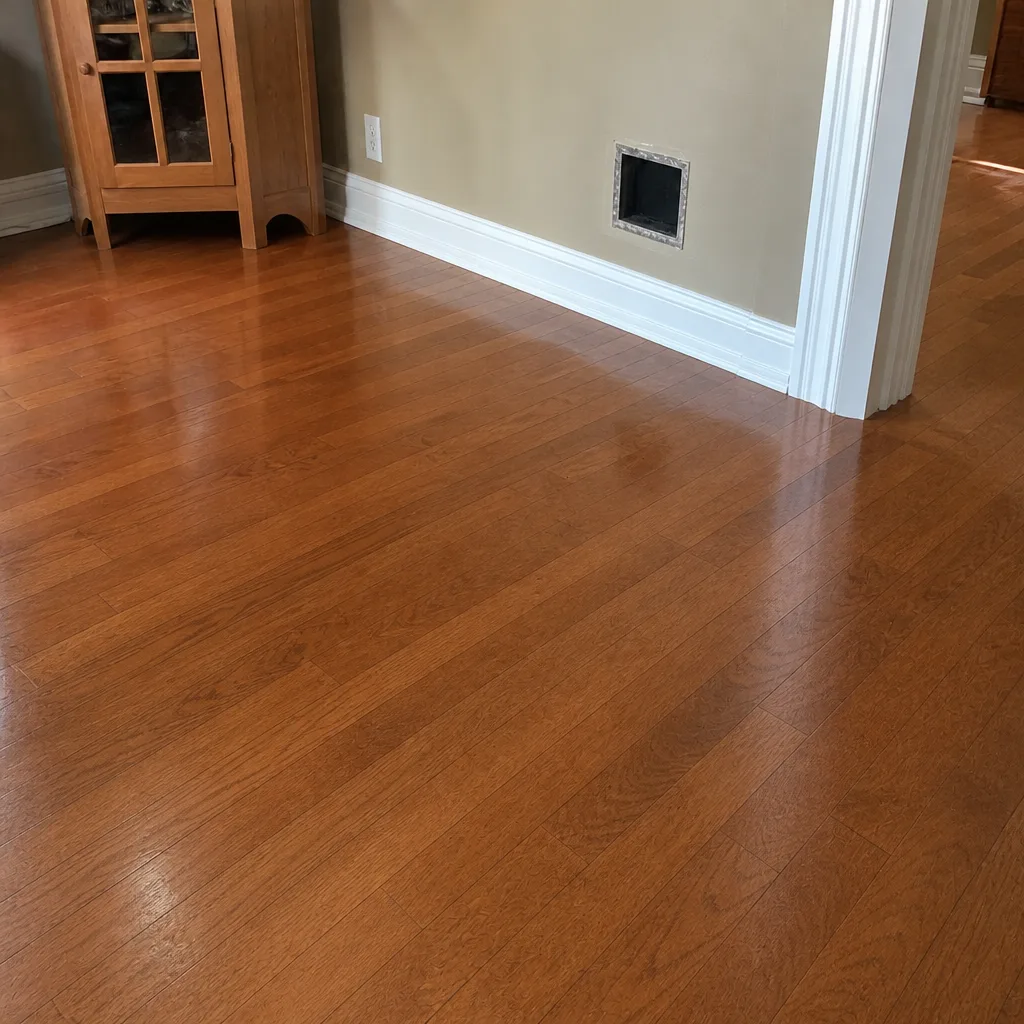 After
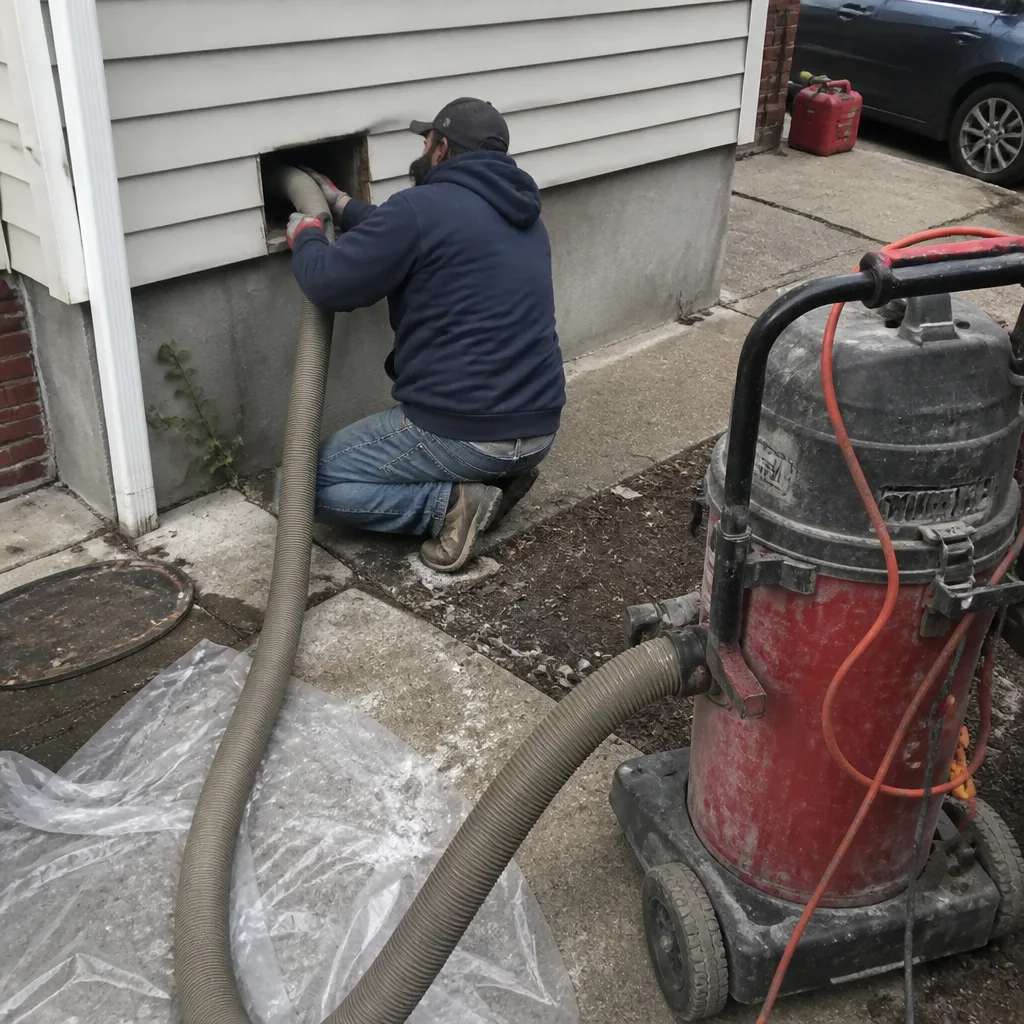 Before
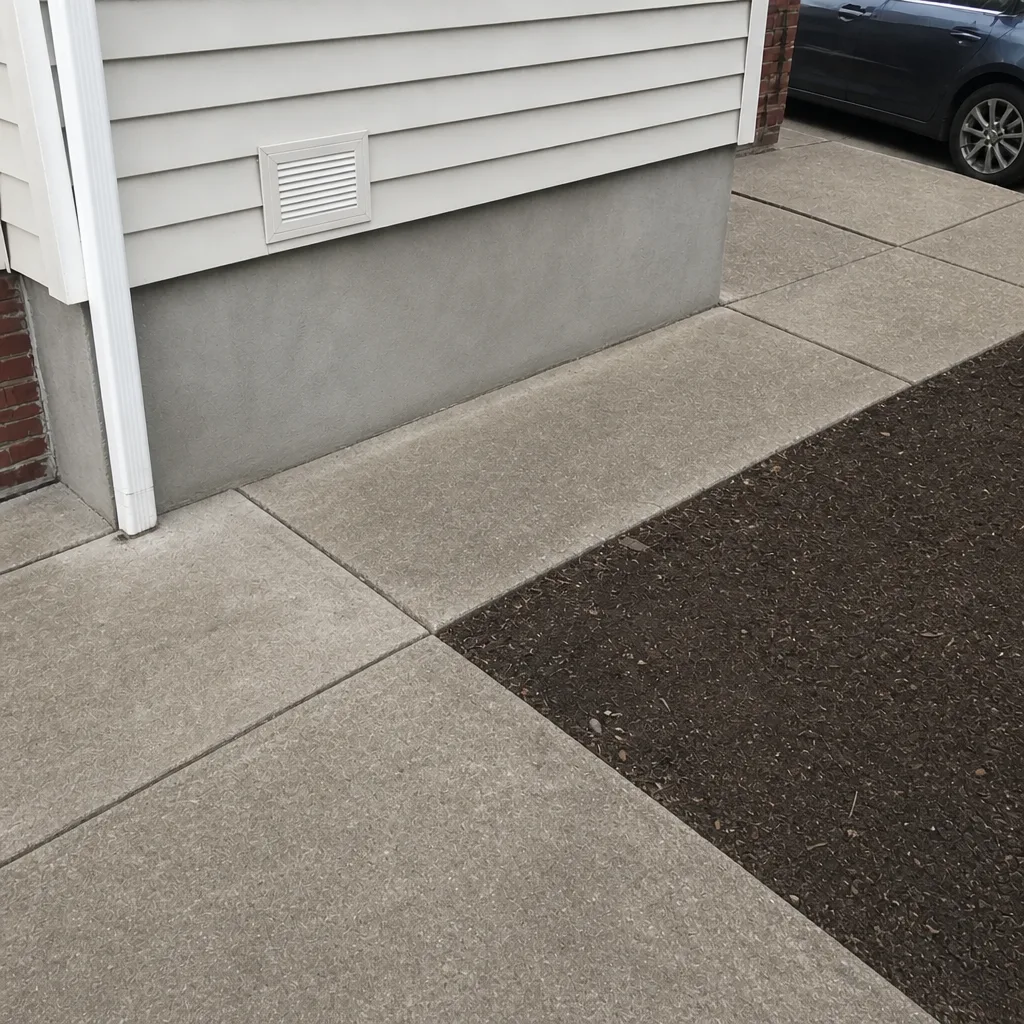 After
When to Call a Professional
Consider hiring a professional duct cleaning contractor if any of the following apply:
- You’ve noticed a persistent musty or stale smell when the heat or air conditioning kicks on.
- You’ve recently renovated, or a previous occupant did, and dust keeps reappearing on every surface.
- Someone in the household has asthma, allergies, or other respiratory sensitivity and the home’s air quality feels worse than it should.
- Your dryer has started taking noticeably longer to dry a load, which usually points to a restricted vent.
- You can see visible debris or lint at the registers or grilles.
- Your system’s accessible ducts show gaps, disconnected runs or crushed sections that could be pulling in unconditioned air from an attic, crawl space or wall cavity.
- You don’t know when the system was last cleaned and the home is new to you.
If the problem is structural, meaning the ducts themselves are compromised, cleaning alone won’t fix it. That’s where air duct repair comes in, and it’s the second half of why we offer cleaning and repair as separate services rather than assuming every job is a cleaning job.
Duct Cleaning Jersey City offers free estimates in Jersey City. Call (844) 834-2949. We answer 24/7. Fast dispatch, 7am-7pm, Sunday through Friday.
Frequently Asked Questions
You know it was done when you receive before-and-after photos of your own system and a written scope that matches the walkthrough. A legitimate contractor documents both, and the photos should show the actual ductwork in your home, not stock images. Ask for both in writing before the job starts, and review the photos before you pay.
Cheaper quotes usually reflect a smaller scope, not a better deal. The lower number often excludes the second system, skips the inspection, or comes from a contractor without professional-grade equipment. Comparing itemized scopes side by side reveals the difference immediately. Call (844) 834-2949 for an exact quote on your home. Estimates are free.
No. NADCA membership is voluntary, and New Jersey does not license air duct cleaning as a standalone trade. Membership is still a meaningful minimum threshold, because it requires the contractor to have met a baseline of training, insurance and a published code of ethics. Ask for the member number and verify it in the public directory; it takes about 60 seconds.
A legitimate contractor should be using professional-grade duct cleaning systems. In our experience, the names to listen for are Rotobrush and Nikro for the cleaning equipment itself, Abatement Technologies for dust containment during the job, and Guardsman-grade products in the cleaning process. If the contractor can’t name their equipment, they probably don’t own professional-grade equipment.
Most homes don’t need duct cleaning on a fixed schedule. A well-maintained system in a home with clean filters and no moisture problems may go years between cleanings. Jobs that come up sooner usually involve a renovation, a moisture issue, persistent odors, or visible debris. Have the system inspected and let the inspection drive the decision.
Often, yes. We clean the supply and return system, inspect for structural issues during the walkthrough, and if we find crushed sections, disconnects or damaged runs, we quote the repair as separate line items. Cleaning and repair are separate services and priced separately, so you know what each one costs. Call (844) 834-2949 for an exact quote. Estimates are free.
For a walkthrough, yes. Someone should be present for the walkthrough, and someone should be available at the end to review the job and receive the photos. The cleaning itself usually doesn’t require you to be in the same room, but the first minutes and the last minutes are the important ones. If you can’t be onsite, coordinate ahead of time.
Air duct cleaning removes debris from the ductwork. Air duct repair fixes compromised ductwork: crushed sections, disconnected runs, damaged plenums. Cleaning won’t fix a disconnected duct, and a repair won’t address accumulated debris inside an otherwise sound run. A specialist should be able to diagnose which one you actually need. See Jersey City for the local context on how these two services work together.
The Bottom Line
Hiring a duct cleaning contractor in Jersey City comes down to a skills test you can actually run, not a price comparison. Ask the three equipment questions. Verify NADCA membership and insurance. Insist on a walkthrough that includes the air handler, the registers and the dryer vent. Demand an itemized quote with a flat price per system, and ask for before-and-after photos of your own system as a written deliverable. The contractor who clears all of those is the one to hire. The one who stumbles is telling you something you should listen to before they enter your home.
If you’d like to run through those questions live, call (844) 834-2949 for a free estimate. We answer 24/7. Fast dispatch from 7am to 7pm, Sunday through Friday.
Written by the team at Duct Cleaning Jersey City.