
Last updated November 15, 2026
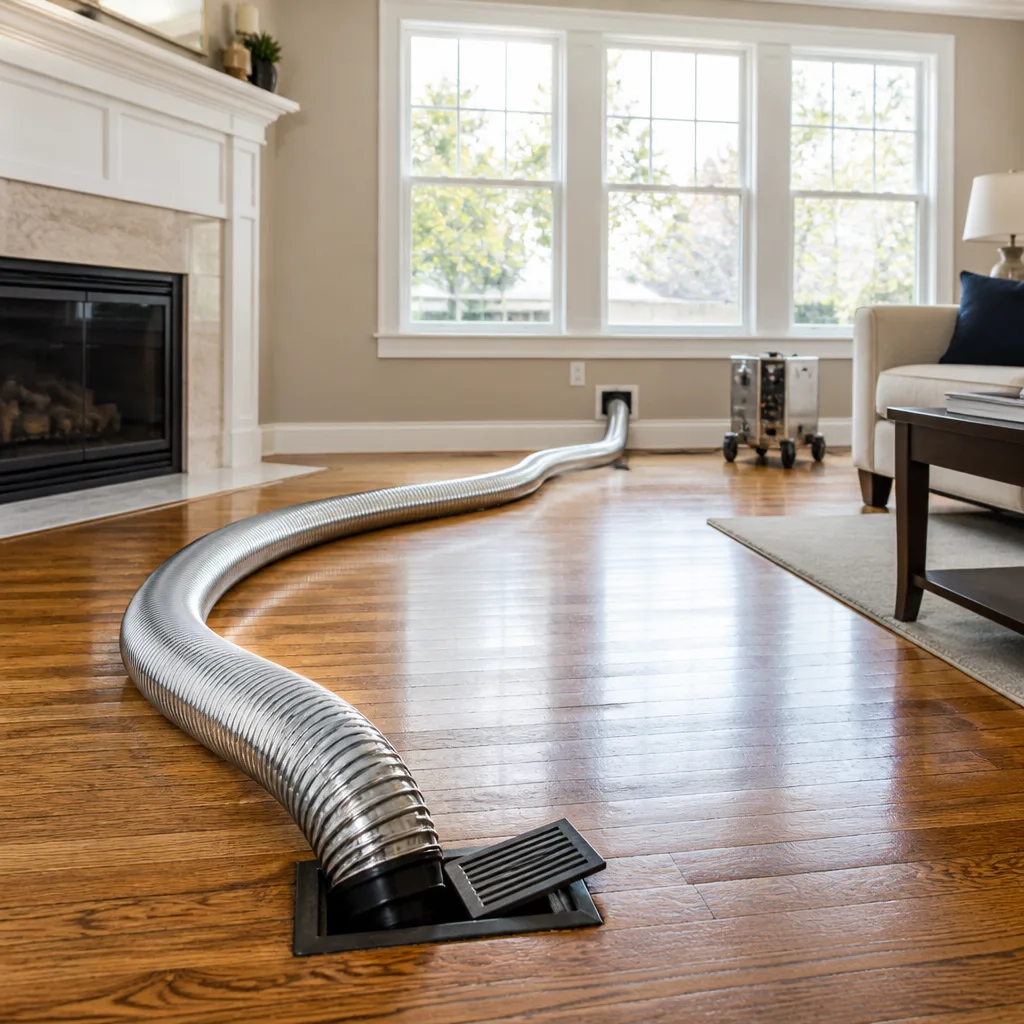 Whole-home duct cleaning
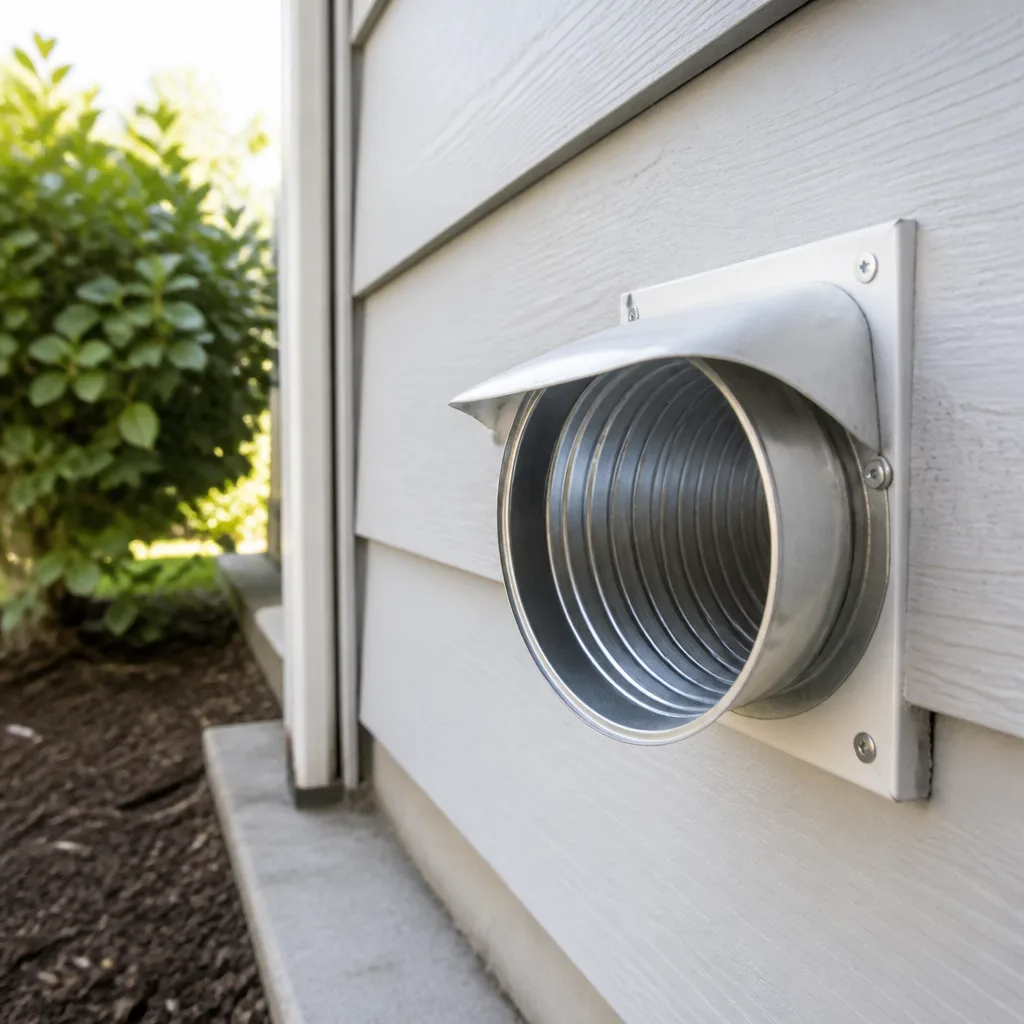 Dryer vent cleaning
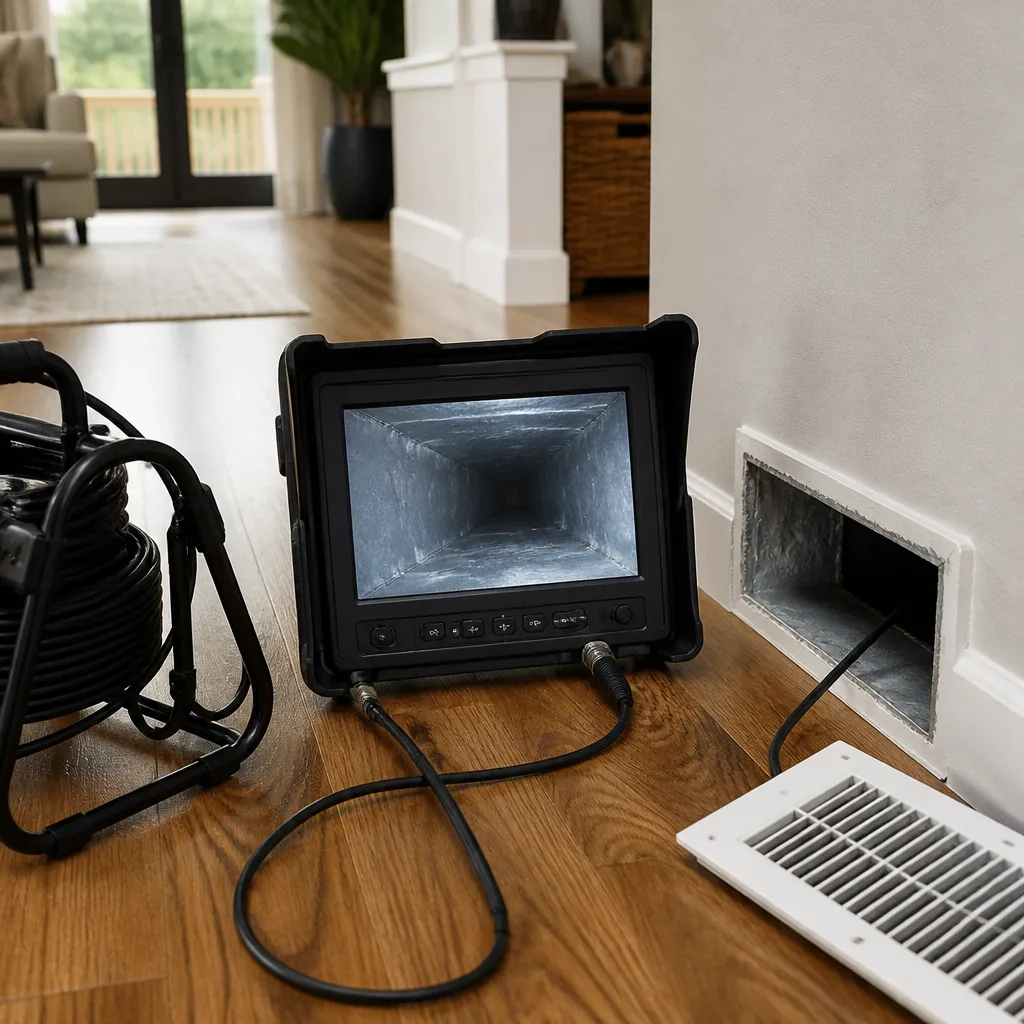 Camera inspection
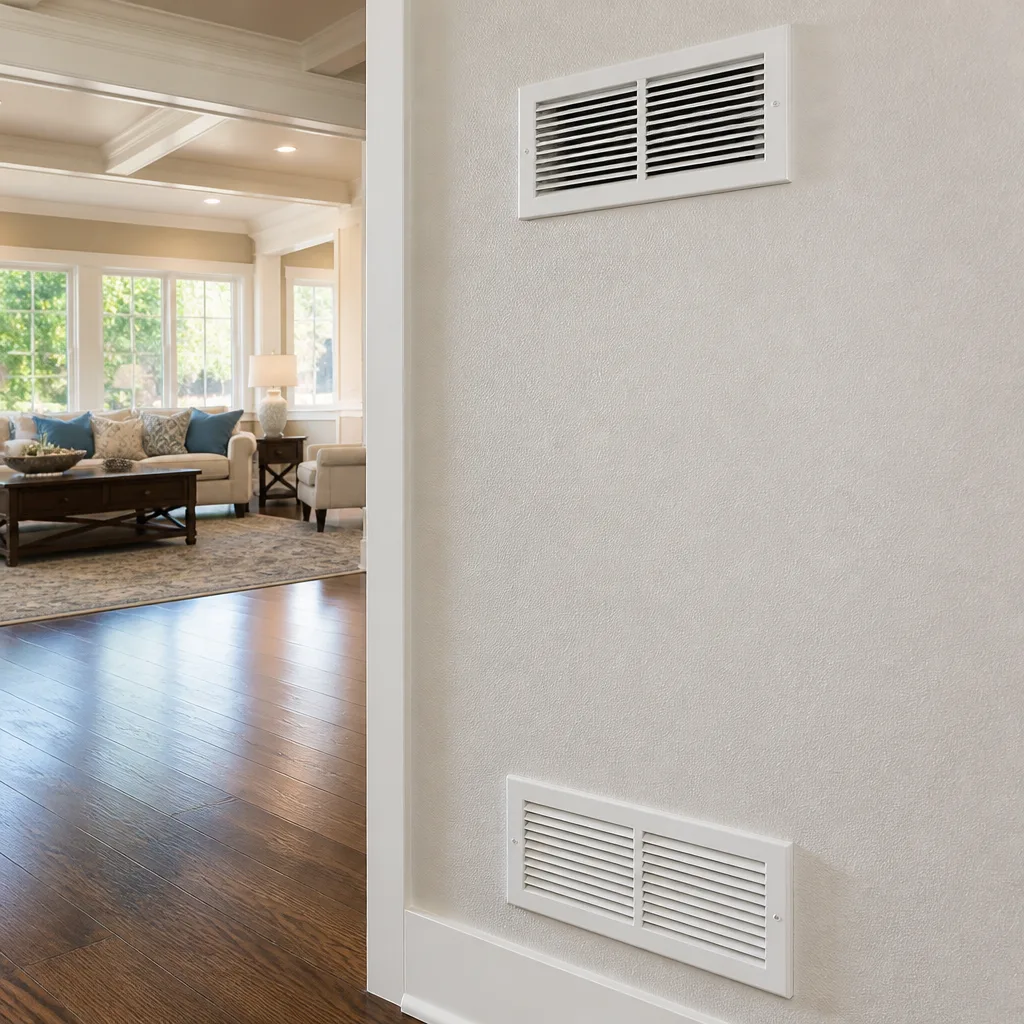 Sanitizing & deodorizing
Whole-system duct and dryer vent check with before-and-after photos - you see exactly what came out of your vents
That "$99 whole-house special" is a bait ad - the real number appears once they are in your hallway, or the "clean" is a shop-vac at the register. We photograph the inside of your ducts before and after instead.
The Complete Guide to Air Duct Cleaning in Jersey City
Most Jersey City homes were built before 1980, which means they’re more likely to have galvanized steel ductwork, undersized returns, and decades of compacted debris that a single brush pass won’t clear. That’s the part almost every generic duct cleaning guide skips. National checklists assume a suburban house with flex duct and a wide-open attic, not a three-story brick rowhouse in Journal Square with a return chase squeezed between joists. The differences matter, because they change what actually needs doing and how you can tell whether it got done. This guide covers how Jersey City’s pre-war and mid-century housing stock creates its own contamination patterns, why source removal beats surface cleaning every time, what professional-grade equipment looks like next to a repurposed shop vac, and how to read a post-cleaning verification so you know the job was finished.
Quick Answer
Air duct cleaning in Jersey City is the mechanical removal of dust, debris, and buildup from inside your supply and return ducts, followed by a verification step that proves it’s gone. It’s worth doing when you see visible buildup, notice dust returning fast, or your energy bills drift up for no clear reason. A proper job uses negative-pressure containment and rotary-brush equipment, not a vacuum nozzle poked into a register.
Styles & brands we work with
- Whole-home duct cleaning
- Dryer vent cleaning
- Camera inspection
- Sanitizing & deodorizing
Table of Contents
- Why Jersey City Ducts Get Dirty Differently
- How the Housing Stock Shapes the Work
- Dense Urban Air and Duct Fouling
- Source Removal vs. Surface Cleaning
- What Professional-Grade Equipment Looks Like
- A Typical Duct Cleaning Job, Step by Step
- How to Read a Post-Cleaning Verification
- Dryer Vents and Duct Repair
- What It Typically Costs
Why Jersey City Ducts Get Dirty Differently
Duct contamination isn’t uniform from city to city. It follows the building, the home’s age, and what’s in the air around it. In Jersey City, all three push in an unusual direction.
Older buildings have older HVAC infrastructure. In many Jersey City homes, the duct system was designed for a furnace and later adapted for central air, which means returns are often undersized for the airflow a modern air conditioner moves. An undersized return runs at higher velocity. Higher velocity means dust pulls harder against the duct wall instead of drifting along it. What you get is fine, stubborn, adhered buildup rather than a loose layer a quick pass would lift.
Then there’s construction age. Pre-war rowhouses and mid-century apartment conversions often use galvanized steel trunks with short branch runs, plus transitions and elbows that were assembled by hand. Those seams and joints collect debris in ways that factory-sealed, straight-run suburban ductwork doesn’t. Debris gathers at the bottlenecks, not along the open straights, so a cleaning that only hits the visible runs leaves the worst material behind.
Density adds a second layer. Jersey City packs a lot of households into a small footprint. Shared walls, shared chases, and closely grouped mechanical spaces mean dust and pollen don’t disperse the way they do in a neighborhood of detached houses. Add the region’s humid summers, which keep fine particulate airborne and let it settle slowly and evenly across surfaces, and you get a steady deposit that builds over a season rather than a one-time event.
If you’ve lived in the same place for years and only ever vacuumed the return grilles, you’ve cleaned the surface and left the actual duct. That gap is where the real work sits.
How the Housing Stock Shapes the Work
The physical layout of a Jersey City home changes what a cleaning crew has to do, and it’s a big reason low-cost quotes often look nothing like the finished job.
- Brick rowhouses and multi-family conversions. Duct runs snake through tight wall cavities and between floors. Access points are limited. A thorough job sometimes requires cutting small, resealable access holes in the duct trunk to reach a run that a register-only approach can’t.
- Galvanized steel trunks. Common in older buildings and durable, but they develop rust pockets and rough patches where debris adheres. Rotary-brush cleaning handles this surface; a flexible hose alone tends to skip over it.
- Undersized returns. Frequently adapted rather than designed for modern cooling. They run hotter and dirtier, and they’re the last thing a quick cleaning crew wants to spend time on.
- Low-clearance mechanical spaces. Basements and utility closets where a full-size truck-mounted vacuum can’t easily reach, and where containment matters more, because dust disturbed in a stairwell has nowhere to settle but your living space.
- Mixed duct materials. Some units have a steel trunk with flex branches spliced in during a later renovation. Flex duct requires gentler tools so the inner liner isn’t torn.
The practical consequence: in Jersey City, a duct cleaning is often an assessment job before it’s a cleaning job. You’re looking for access, material, and condition before you can even plan the work. That takes time a one-price-for-everything quote doesn’t account for.
Dense Urban Air and Duct Fouling
Air duct contamination doesn’t start in the duct. It starts with what’s drawn in. In a dense, transit-heavy area around Jersey City, two forces accelerate the accumulation more than most homeowners realize.
The first is particulate from heavy traffic and construction. Jersey City sits at the center of a busy regional corridor, with freight traffic, delivery fleets, and constant building activity. Fine particulate from diesel exhaust and construction dust enters through windows, doors, and the fresh-air intake your HVAC pulls from. Your furnace and air handler don’t filter all of it. A standard throwaway filter catches the larger stuff. The finest particles pass through and land on the duct walls, where they bond. Over time they darken the return grilles far faster than in a quiet suburb, a signal most homeowners notice but can’t explain.
The second is vibration. Heavy truck traffic and rail movement create constant low-level vibration that shakes dust loose and keeps it moving, so it settles in a shifting pattern rather than a stable layer. This matters because it means the buildup varies by location. A duct near the street-facing wall of a downtown building can carry noticeably more accumulation than one on the interior.
That’s why a professional cleaning should be paired with thought about filtration. We install and recommend Honeywell and Aprilaire air quality products so the cleaning lasts. A better media filter or whole-home filtration component captures the fine particulate at the source and reduces how fast the ducts foul again. Cleaning without addressing filtration is a job you’ll pay for again sooner than necessary.
If you’re wondering how often to clean in this kind of environment, the density and traffic load are exactly why urban ducts tend to need attention on the shorter end of the range.
Source Removal vs. Surface Cleaning: What Actually Works
Here’s the distinction that separates a real duct cleaning from a cosmetic one, and most homeowners never hear it explained.
Surface cleaning means running a vacuum over what’s visible. Grilles get wiped, loose dust gets pulled from the first few inches of each duct. It looks better immediately. It also leaves the adhered material on the duct walls untouched, and that material keeps shedding back into the airstream almost at once.
Source removal means physically dislodging everything bonded to the duct wall and getting it out of the system entirely. It’s the standard that certified professionals work to, and it requires two things working together: mechanical agitation to loosen the material, and airborne containment to capture it before it escapes into the building.
- Agitation. A rotary brush or air whips run through each duct, scraping bonded debris off the walls. This is the step surface cleaning skips.
- Containment. Negative pressure holds the loosened debris inside the duct so it can’t drift into living space. Without this, you’re just moving the dirt around.
- Capture. A high-capacity HEPA vacuum connected to the system pulls the debris into a collection unit rather than back into the room.
- Verification. The cleaned duct is inspected to confirm it’s actually clear, not assumed to be.
“Looks clean” and “is clean” aren’t the same thing, and the difference is entirely in the method. A service that only cleans the surface will typically make your home feel dustier for a few days, because you’ve stirred what was already there without removing it.
What Professional-Grade Equipment Looks Like
Equipment is the clearest tell of whether a job is done properly, and it’s the first thing we’d look at if we were hiring someone.
Duct cleaning specialists use purpose-built tools. We run Rotobrush rotary-brush systems, which are the industry standard for getting a brush through a duct, working the circumference, and agitating the walls. We also use Nikro cleaning equipment for professional HVAC duct work. Both are built for this trade. Neither is a consumer vacuum dressed up for the occasion.
The containment side is where low-bid crews usually cut corners. Containment means negative-pressure air filtration. We use Abatement Technologies equipment, the same category of negative-air machine used in professional remediation work. That’s the difference between a crew that controls the dust and one that leaves a fine film on every surface in your home.
Here’s a quick way to compare:
- Professional setup: Rotary brush or air whip, dedicated HEPA vacuum with high airflow, negative-air machine, and hoses rated for it. Cleaning products from a professional source, not off-the-shelf substitutes.
- Low-bid setup: A shop vac, a flexible hose, maybe a hand-scrub brush. No containment, so disturbed dust escapes into the room. No rotary agitation, so the walls stay coated.
The result differs as much as the tool does. If you want the longer version of what the right tools buy you, Duct Cleaning Jersey City lays out what a properly equipped service actually involves. Better air starts with the right equipment.
A Typical Duct Cleaning Job, Step by Step
Knowing the sequence helps you judge a crew while they’re on site. Here’s the typical order of work.
- Inspection and access planning. We check duct material, identify the main trunk and branch runs, find access points, and flag areas that need a new access cut. In a Jersey City rowhouse this step is the most important one.
- Setting containment. Negative-air equipment positions outside the work zone, HEPA vacuum connects to the system, and registers are sealed so disturbed debris stays inside the ducts.
- Cleaning the trunk and branch lines. Rotary brush and air tools work through each run, starting at the farthest branch and moving back toward the vacuum. Dirt gets pushed toward collection, not toward the living room.
- Cleaning the supply and return registers. Grilles, diffusers, and boots are cleaned separately because debris collects heavily at the terminal ends.
- Cleaning the air handler and coil area. Where accessible and within scope, the interior of the air handler and the coil face get attention. A dirty coil defeats a clean duct.
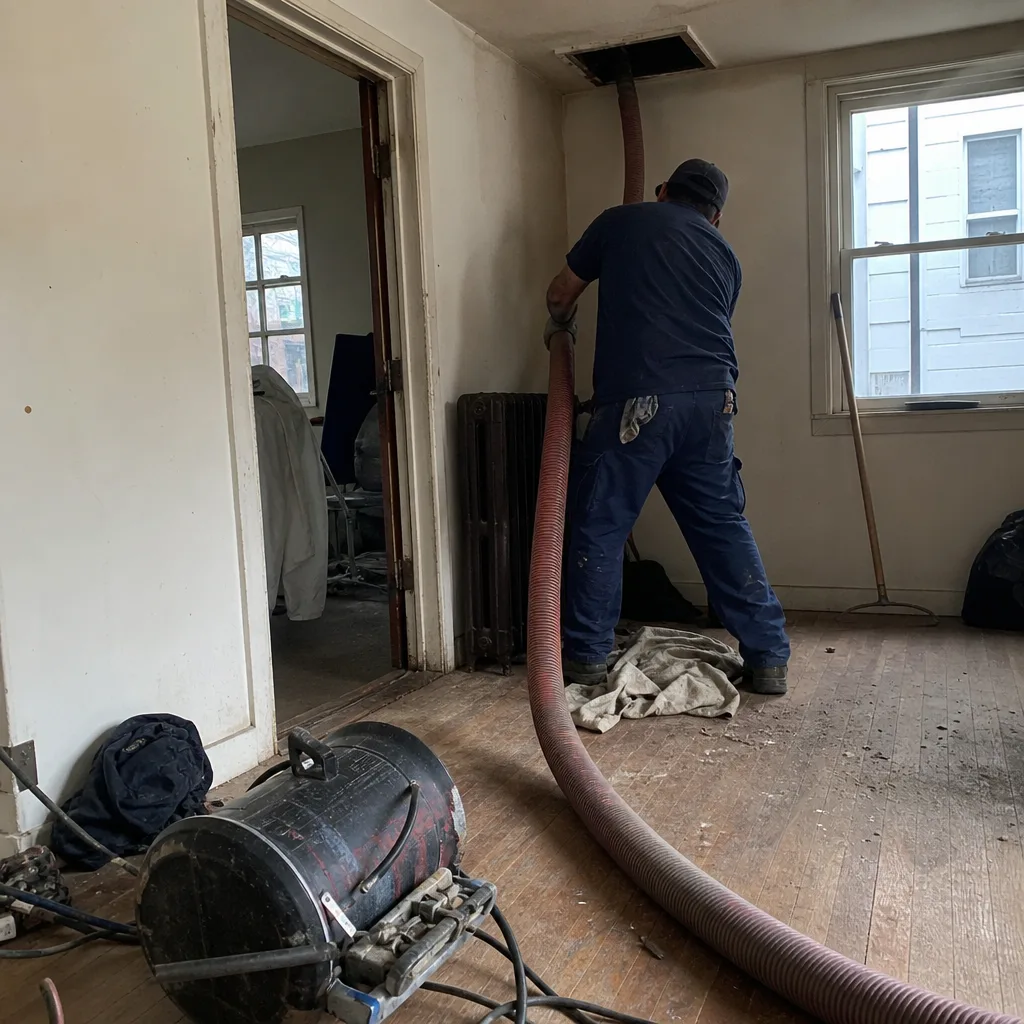
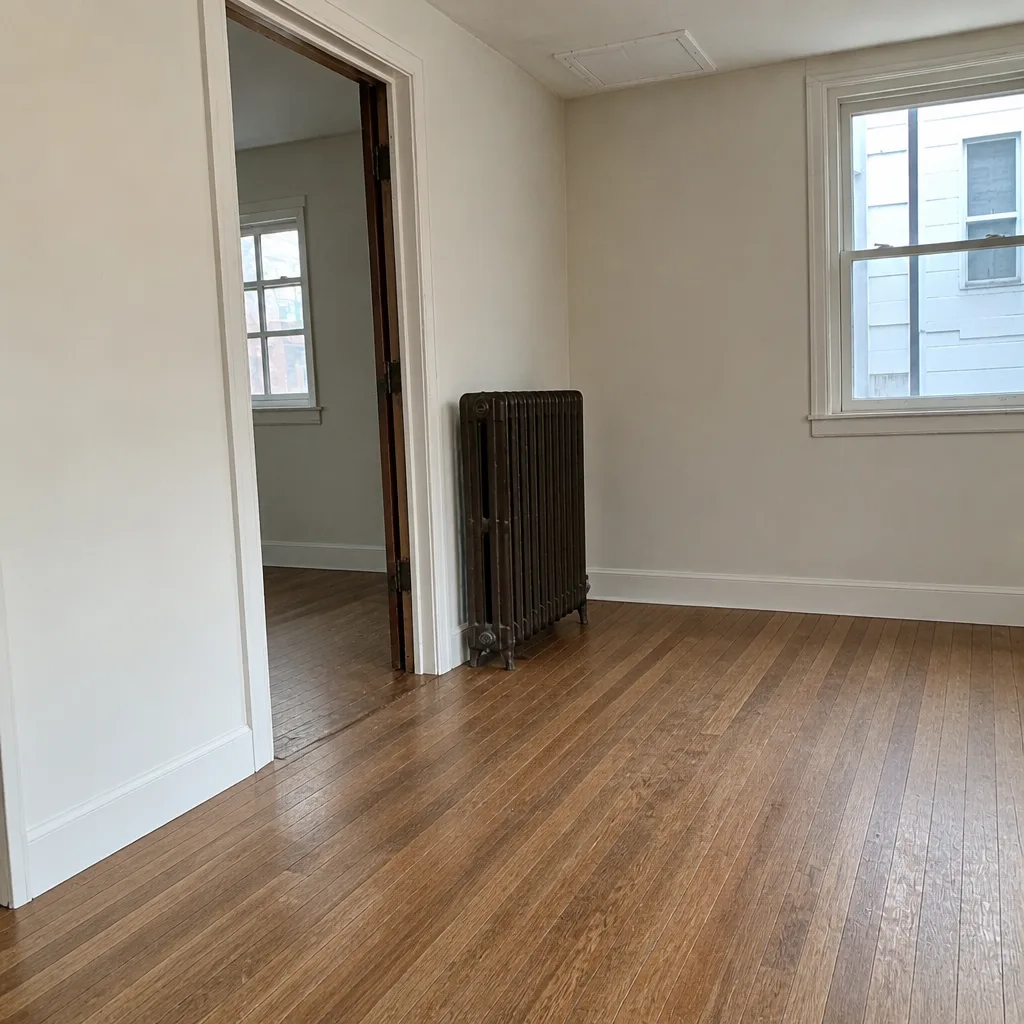
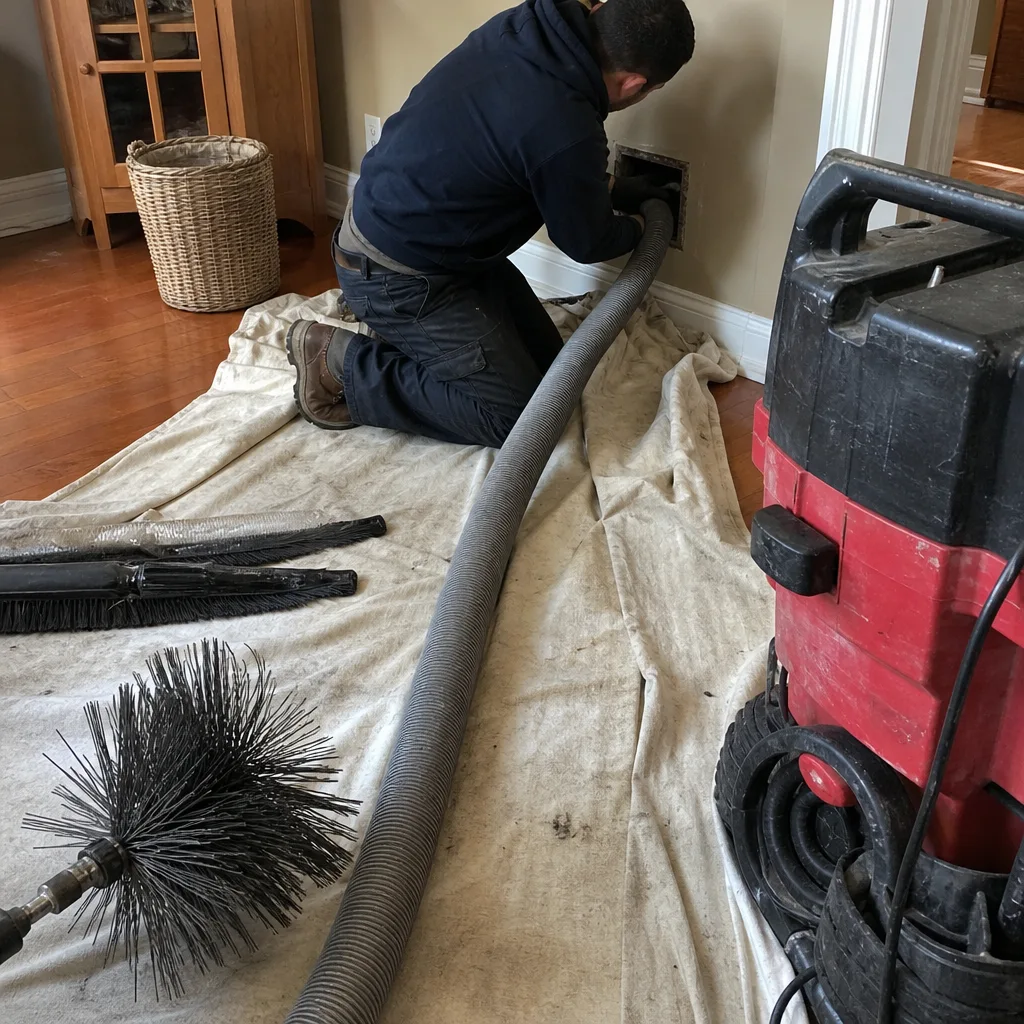
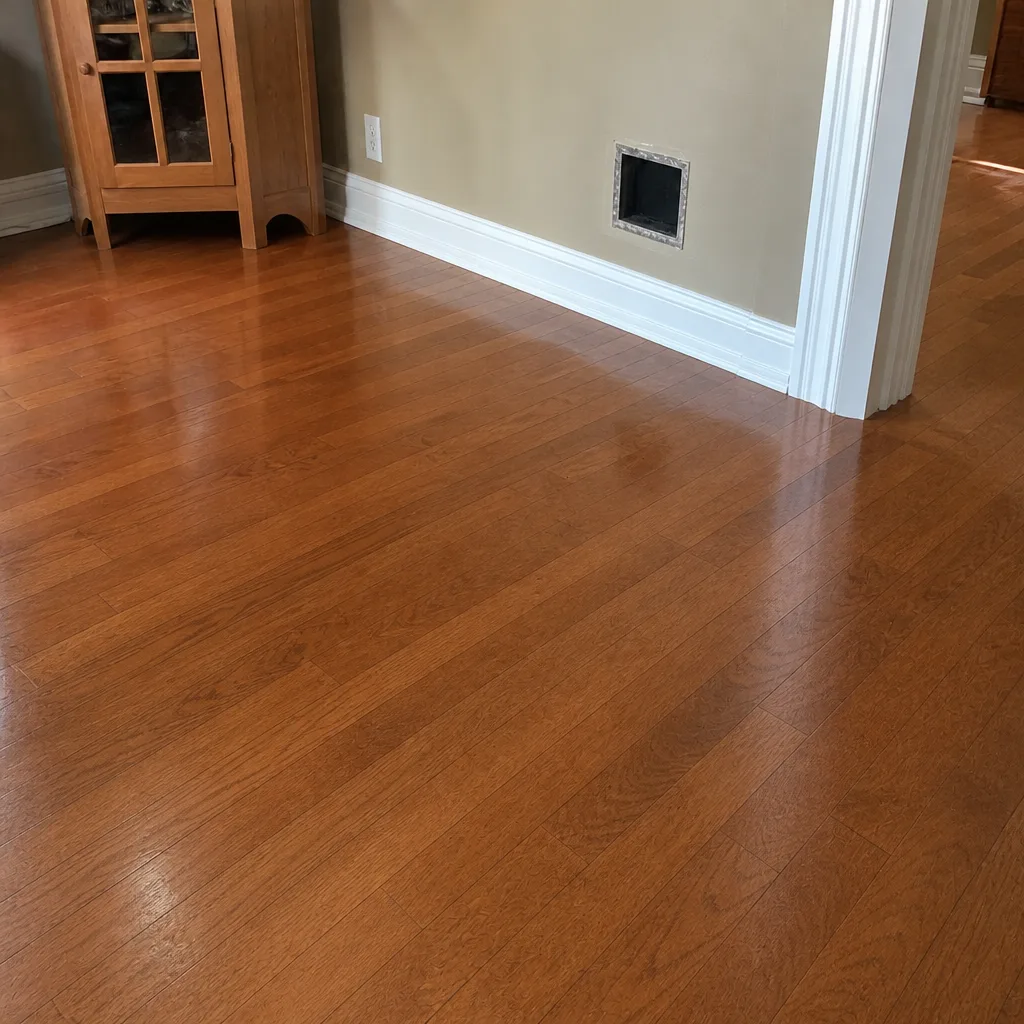
- Before-and-after photos. We document the interior of the duct before and after, so you can compare the two rather than take anyone’s word for it.
- Final inspection. We confirm the ducts are clear, seal any access holes we cut, and review any issues we found along the way.
Step six is the one to insist on. Documentation is the simplest way to know the work was actually completed, not just started. air duct cleaning here really comes down to that.
How to Read a Post-Cleaning Verification
Once the work is done, you should be able to confirm it independently. A few straightforward checks make that easy.
- Before-and-after photos of the actual ducts. Interior shots, not grille close-ups. You should see the same duct sections side by side.
- A visual check through the registers. Shine a light down a supply run. It shouldn’t be coated in matted dust. The walls should look like metal, not a grey film.
- No dust film on your surfaces afterward. If your furniture and floors are coated in a fresh film of fine grey dust, containment failed during the job.
- The debrief. A competent technician will tell you what was found (rust, missing insulation, a crushed section, compromised flex liner) along with the cleaning. It’s information you can act on.
- Never any spillover into your drain traps or seals. Some crews rig a vacuum to a return without sealing a bathroom vent trap on your plumbing, and the negative pressure can siphon a fixture’s water seal away. It’s easily avoided and often overlooked.
A verification isn’t a certificate or a rating. It’s a set of observations you can check yourself. If a crew can’t show you the inside of the duct in photos before and after, ask why.
Dryer Vents and Duct Repair: The Two Jobs People Skip
Duct cleaning gets the attention, but two other jobs usually belong in the same visit, and skipping them is a mistake.
Dryer vents are a fire hazard. Lint buildup in the vent line chokes airflow and traps heat, and this is the reason dryer vents get a fraction of the attention of supply ducts. A dryer vent isn’t part of the duct cleaning in the strict sense, but the risk is real, and it’s worth clearing at the same time. We treat a dryer vent cleaning as seriously as the ductwork itself. If your dryer takes longer than it used to, or clothes come out hot and damp, the vent is the first place to look.
Duct repair is the second. Cleaning a compromised system just spreads problems around. Loose joints, crushed sections, and torn flex liners leak conditioned air into wall cavities and pull dirty air back in. We offer air duct repair as a standalone service, which means we can diagnose and fix compromised ductwork instead of cleaning around it and leaving the underlying problem in place. If we find a failed joint, a sagging run, or a section crushed during a renovation, we tell you and fix it. We clean, and if something’s broken, we fix it.
All three service lines (duct cleaning, dryer vents, and duct repair) sit under one roof, which matters in older housing where problems tend to show up together.
What It Typically Costs in Jersey City
There’s no honest fixed price for every home. Cost depends on the number of runs, access, duct material, and condition. We don’t quote per vent and we don’t run coupon teasers. Instead, we price per system and agree on a flat price in a written estimate before any work starts, so what’s quoted is what you pay.
- Duct cleaning, typical Jersey City home: priced per system based on run count and access. Estimate confirms the figure before work starts.
- Dryer vent cleaning: a separate, simpler job, priced on the run length and vent type.
- Duct repair: estimated per issue once diagnosed, because the scope varies from a single joint to a section replacement.
The written estimate is the final word. If you’re comparing quotes, ask each one whether they price per system or per vent, and whether containment and verification are included. Those two questions filter out most of the surprises.
Our technicians have up to 10 years of experience, and estimates are free. Call (844) 834-2949 to get yours. We answer 24/7. Fast dispatch from 7am to 7pm, Sunday through Friday.
Common Mistakes to Avoid
- Choosing on price alone. The lowest quote often means surface cleaning and no containment. You pay less and get dirt pushed back into your rooms.
- Skipping the containment question. A crew without negative-air equipment will coat your home in disturbed dust. Ask upfront what they use to control it.
- Accepting grille-wiping as proof of work. Wiping the registers is cosmetic. The duct wall behind them is where the real buildup lives.
- Ignoring the dryer vent. Homeowners focus on air ducts and forget the vent line, which is the higher fire risk of the two.
- Cleaning over damaged ductwork. A crushed or disconnected run means the cleaning misses sections entirely. Diagnose first, then clean.
- Assuming a new filter fixes everything. Filtration helps, but it doesn’t remove what’s already bonded to the duct walls. Cleaning and filtration do different jobs.
- Believing “clean” without documentation. Before-and-after interior photos are the simplest way to confirm the work happened. Ask for them.
See the difference
 Before
 After
 Before
 After
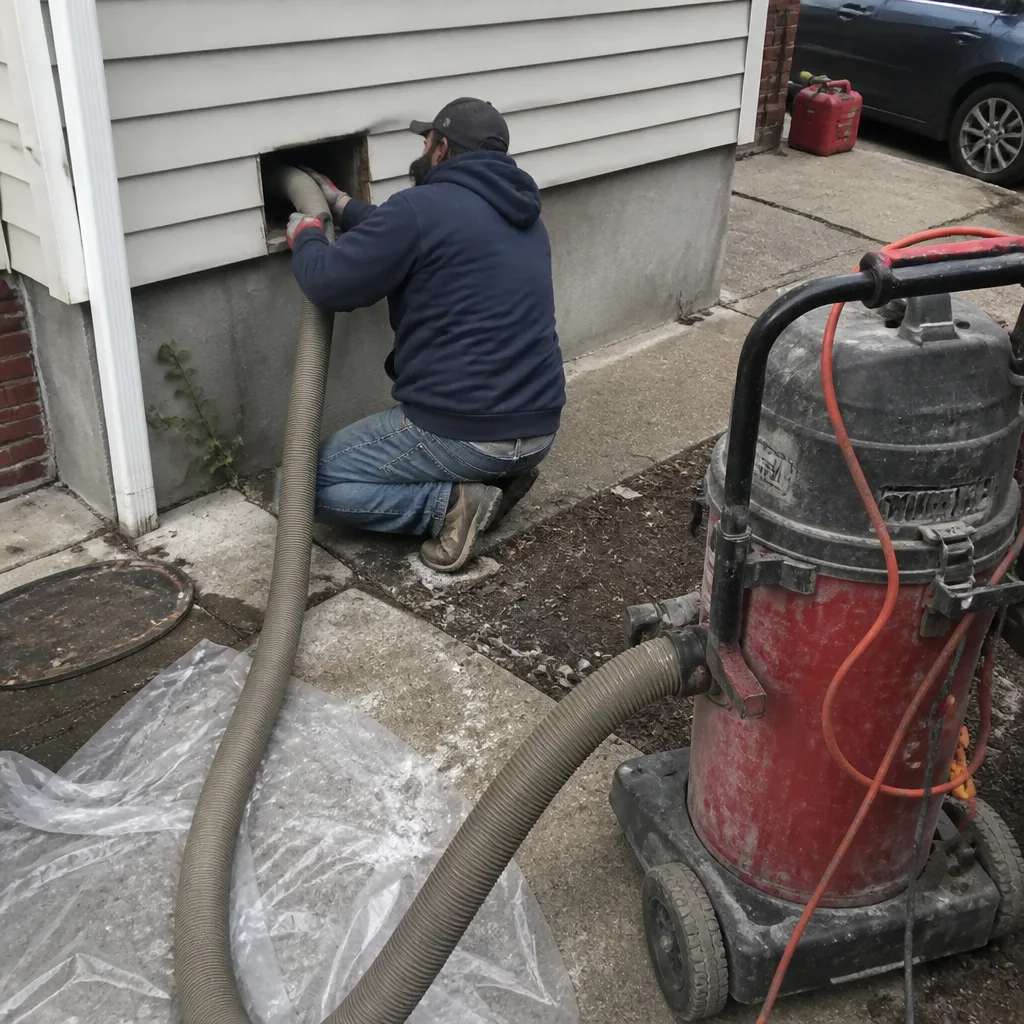 Before
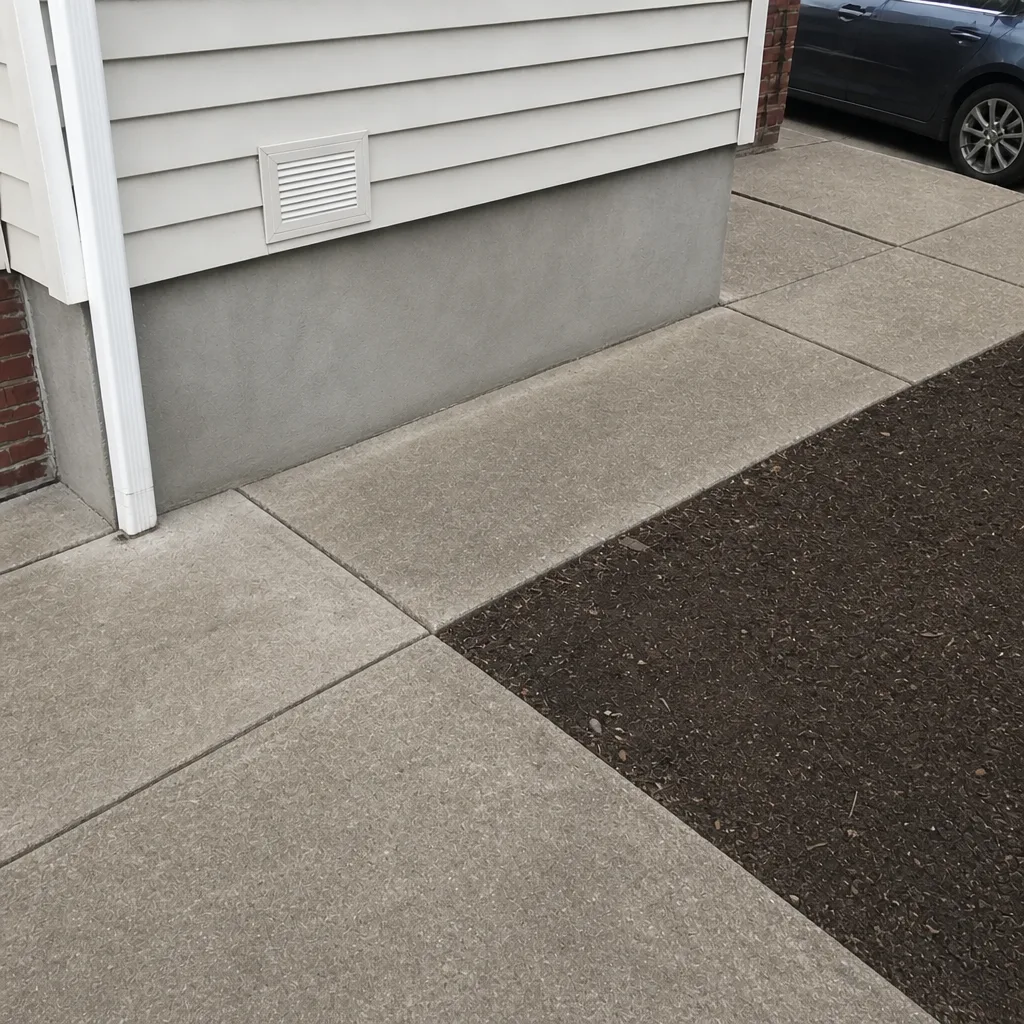 After
When to Call a Professional
Some situations clearly point to needing a professional rather than more vacuuming. You see steady dust returning within days of cleaning, dark streaks around supply and return grilles, or a visible layer inside the duct when you shine a light in. Your energy bills climb for no clear reason, or airflow from one room’s register feels noticeably weaker. Someone in the home has ongoing breathing or allergy trouble that seems worse indoors. You’ve moved into a Jersey City building of uncertain age and don’t know the last time the ducts were touched. You’ve had renovation work done and debris may be sitting in the system. Or the dryer now takes two cycles to finish a load. Any of these is a reasonable moment to get a professional assessment. Duct Cleaning Jersey City offers free estimates in Jersey City. Call (844) 834-2949. We answer 24/7. Fast dispatch from 7am to 7pm, Sunday through Friday. Estimates are free, and the price is fixed per system in a written estimate before work starts.
Frequently Asked Questions
Air duct cleaning is priced per system, not per vent, and the exact figure is set in a free written estimate after we see the run count, access, and condition. We don’t publish a coupon price because the number of runs varies so much between a downtown rowhouse and a converted multi-family. Call (844) 834-2949 to get an exact quote. Estimates are free.
Every two to three years is a reasonable baseline for most homes, and sooner if you have pets, recent renovation, or live in a dust-heavy corridor. In Jersey City, the density and traffic load push many homes toward the shorter end of that range. If you notice dust returning within weeks of a cleaning, that’s your signal to call and assess sooner. Call (844) 834-2949 for an exact quote.
Cheaper quotes usually skip rotary brush cleaning and negative-pressure containment, which are the two steps that make a cleaning actually work. Without them, the crew moves dirt around instead of removing it, and you often end up dustier than before. We agree on one flat price per system before work starts, so nothing changes once the technician is on site.
Ask for before-and-after interior photos of your own ducts, not grille close-ups. Then look at the results in your home: no fresh dust film, visibly clean duct walls through the registers, and a technician who can explain what was found. Documentation is the simplest proof a job was finished properly. Call (844) 834-2949 with questions about any job you’ve had done.
Yes. Dryer vent cleaning is a separate service alongside our duct cleaning, and it’s worth doing together because lint buildup is a genuine fire risk. If your dryer takes longer than it used to or clothes stay damp, call (844) 834-2949 for an estimate.
We diagnose and repair compromised ductwork as a standalone service, so a loose joint, crushed section, or torn flex liner can be fixed rather than cleaned around. Cleaning a damaged system just moves dirt through a leak. Call (844) 834-2949 and we’ll assess both in one visit.
The Bottom Line
Duct cleaning in Jersey City isn’t a generic add-on. Older housing stock, undersized returns, galvanized steel, and a dense urban particulate load make it a harder job here than a national checklist accounts for. What matters is method: source removal, not surface cleaning; real containment, not a shop vac; and verification you can see. The right equipment from Rotobrush, Nikro, and Abatement Technologies is what separates a job that sticks from one you pay for twice. Ask for a flat price per system, before-and-after photos, and a clear answer on containment, and you’ll know what you’re getting.
Call (844) 834-2949 for a free estimate. We answer 24/7. Fast dispatch from 7am to 7pm, Sunday through Friday. For the full scope of what we do, see Jersey City and the main page at Duct Cleaning Jersey City.
Written by the team at Duct Cleaning Jersey City.