
Last updated November 15, 2026
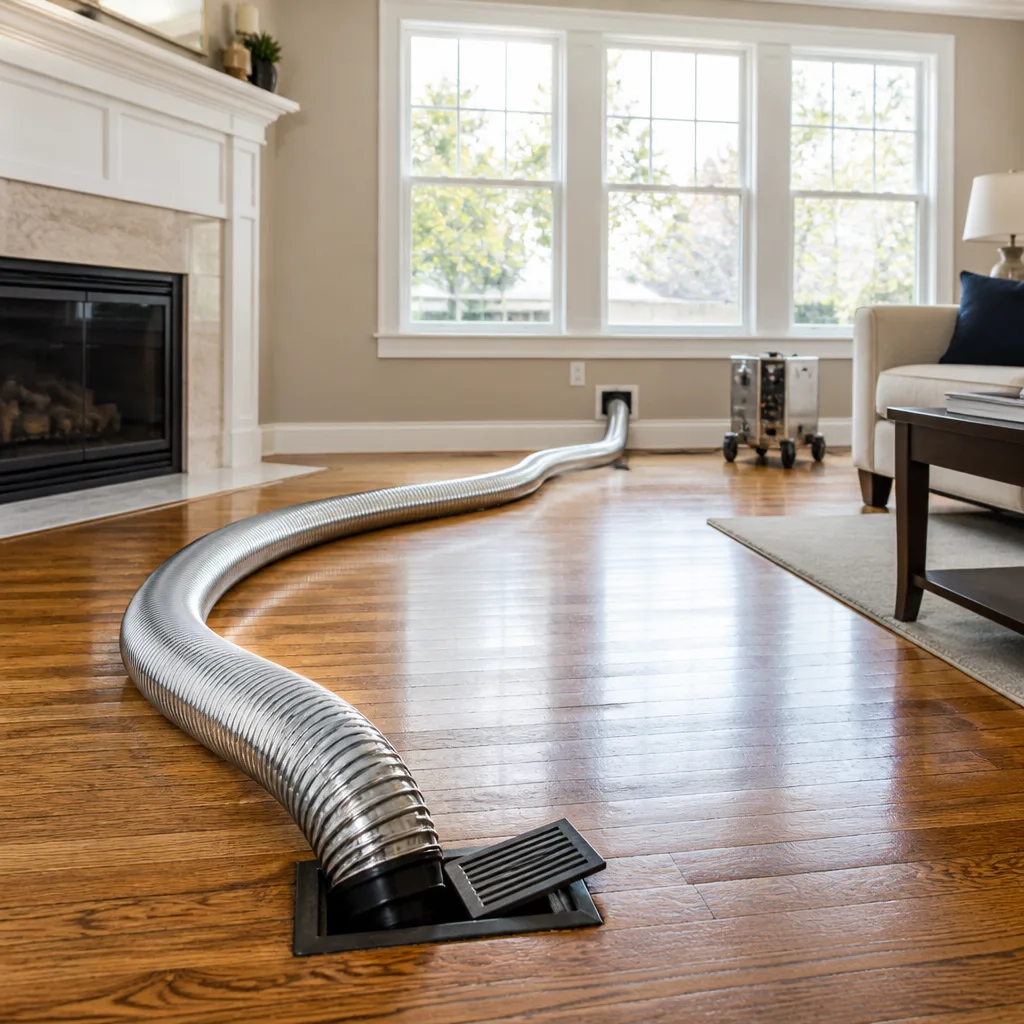 Whole-home duct cleaning
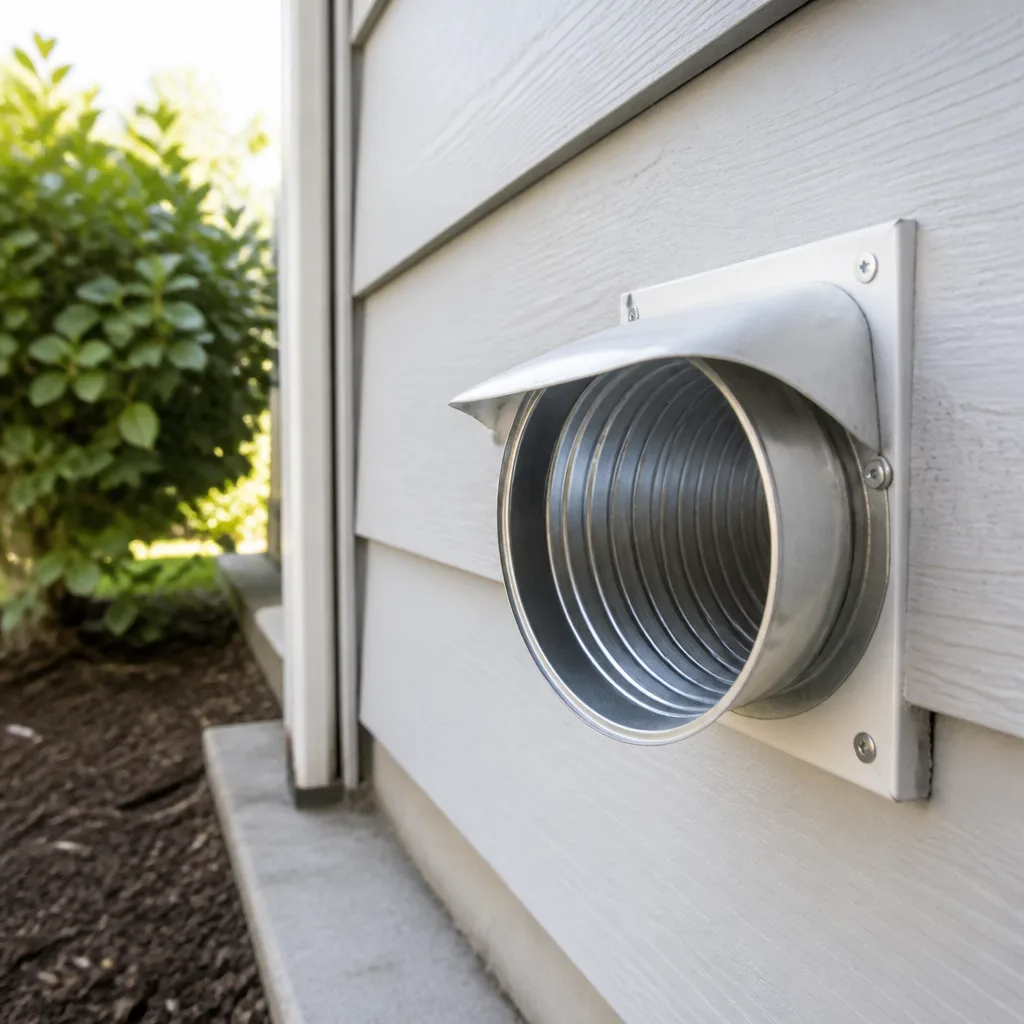 Dryer vent cleaning
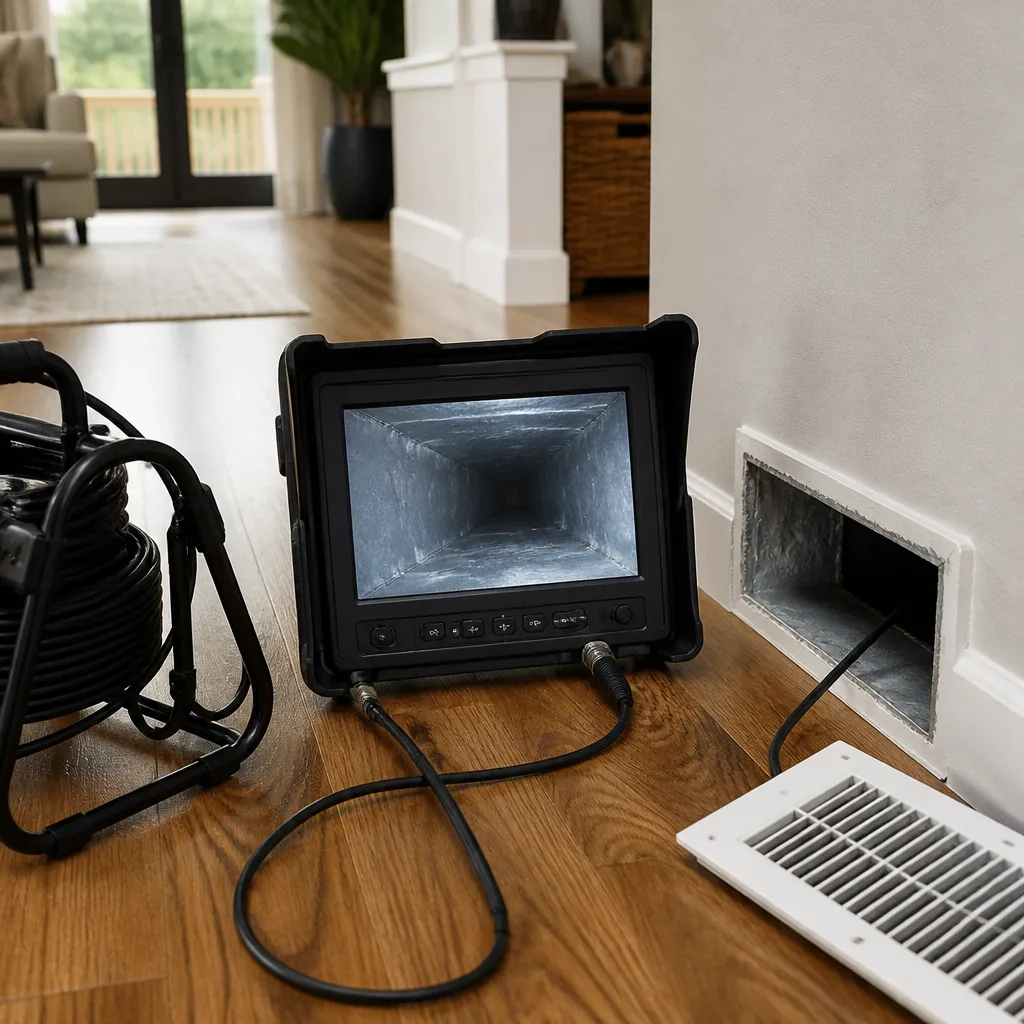 Camera inspection
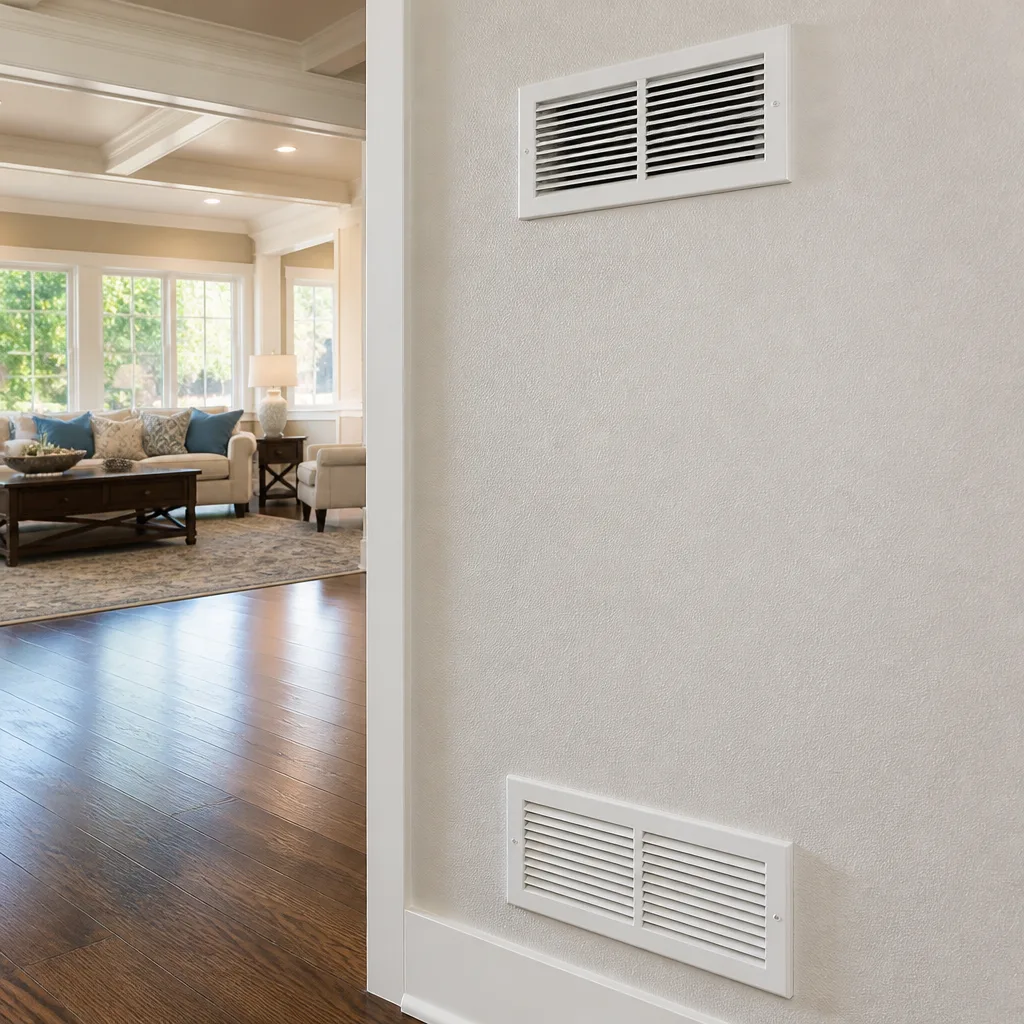 Sanitizing & deodorizing
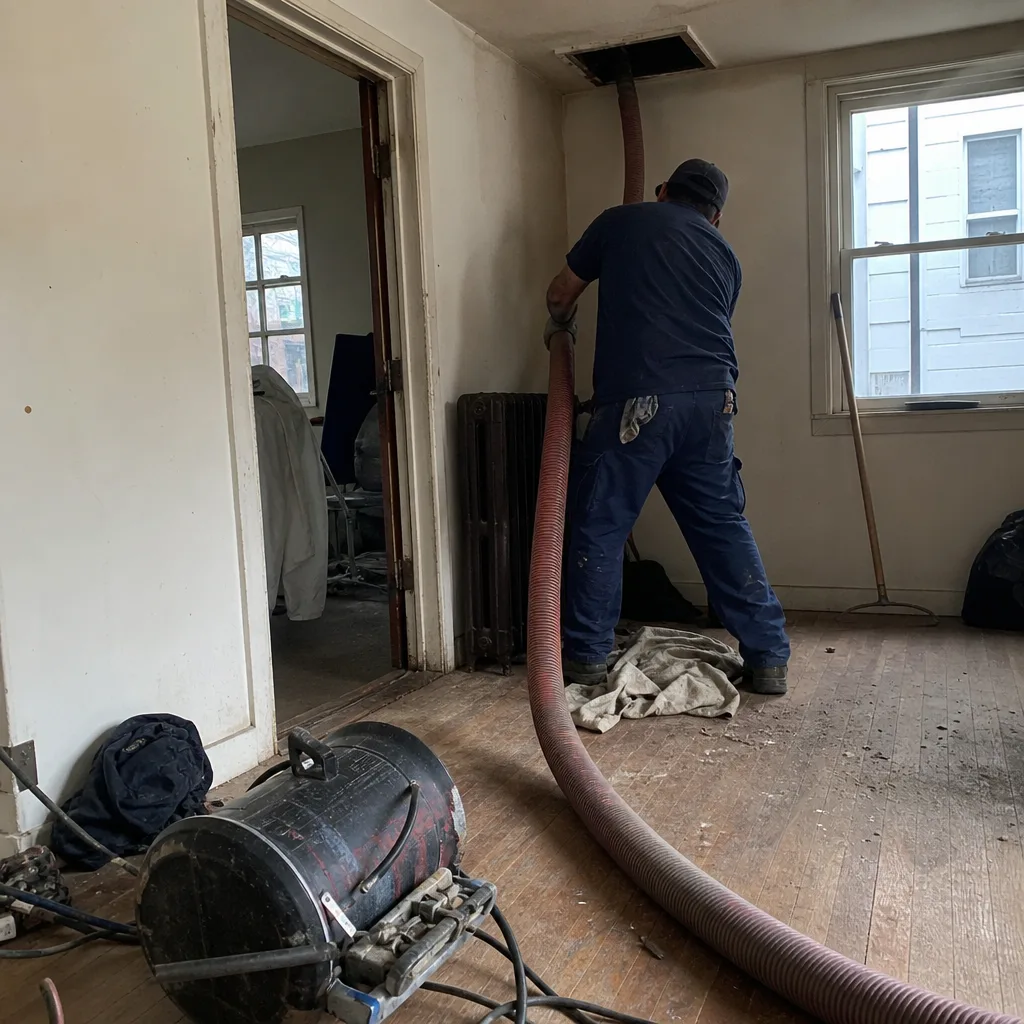
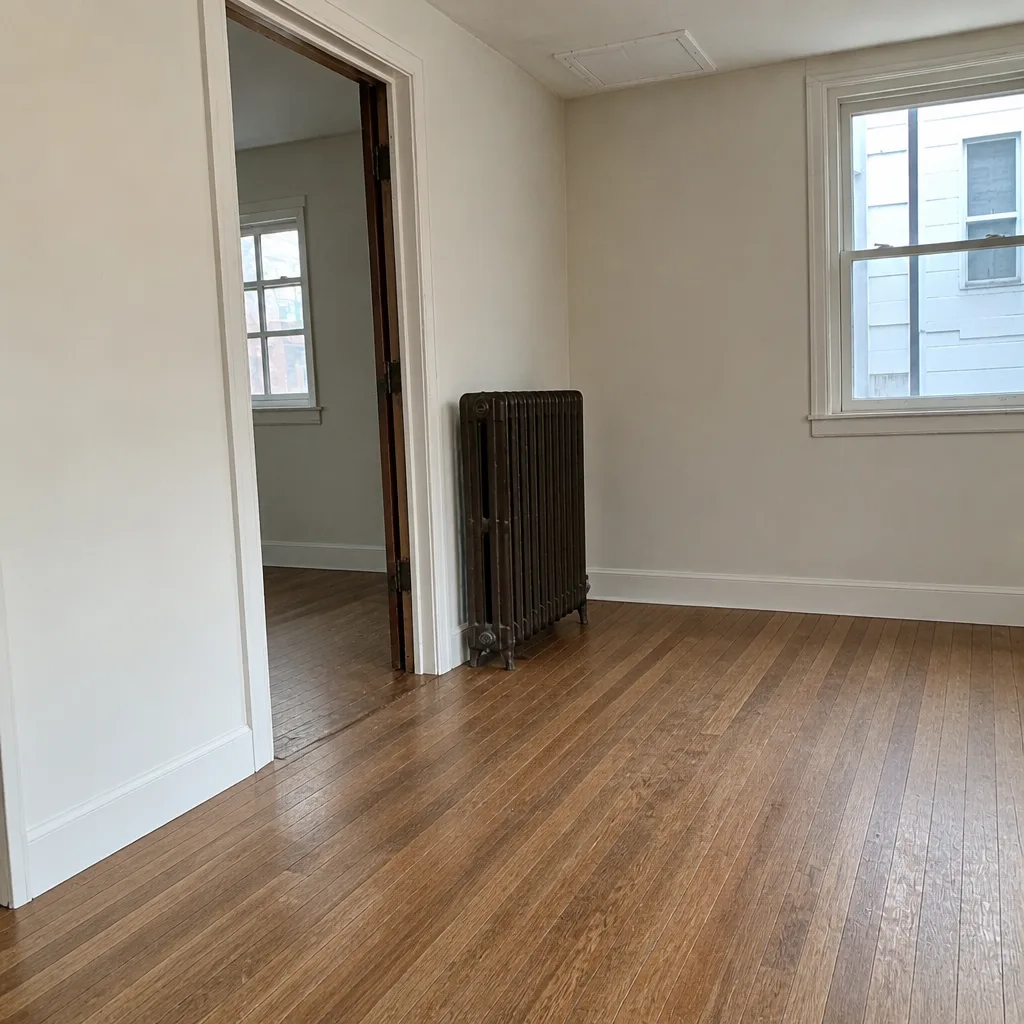
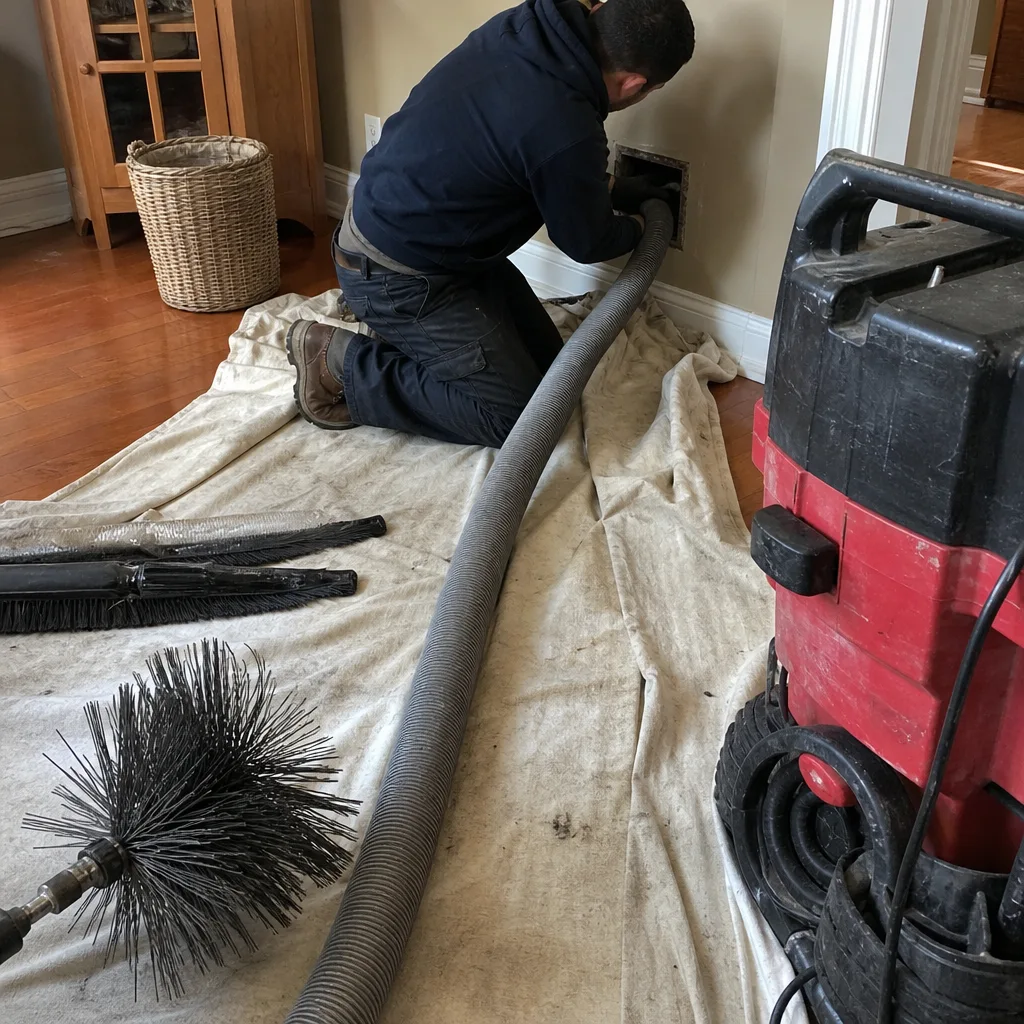
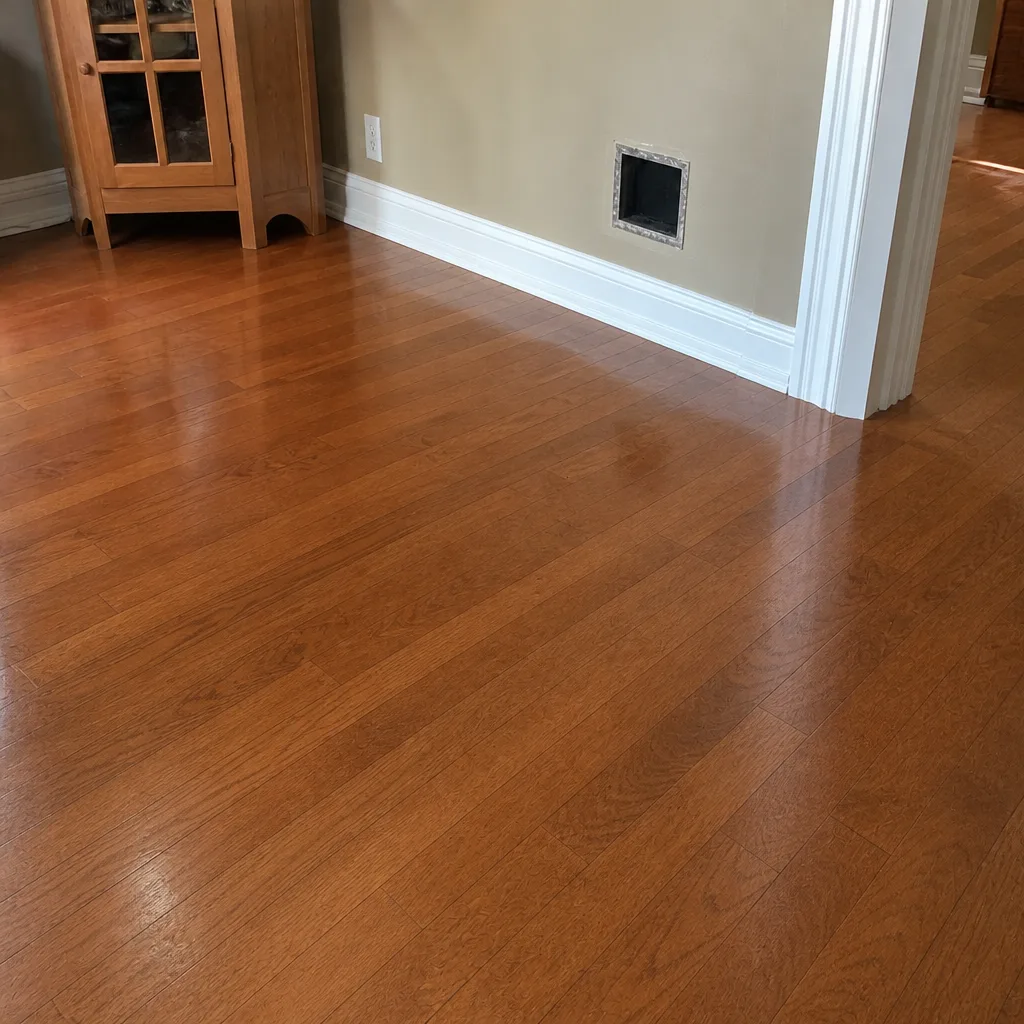
Whole-system duct and dryer vent check with before-and-after photos - you see exactly what came out of your vents
That "$99 whole-house special" is a bait ad - the real number appears once they are in your hallway, or the "clean" is a shop-vac at the register. We photograph the inside of your ducts before and after instead.
Choosing the Right Air Duct Cleaning Brand: A Buyer’s Guide for Jersey City
Trying to answer the search for the best air duct cleaning company in Jersey City usually shortlists four or five names, and from the outside they look identical. Every site promises trained technicians, every van photo carries a logo, every estimate arrives in the same format. What almost nobody does is look past the logo at the machinery the work depends on. We’ve seen homeowners ask a contractor the right question before a job starts, only to get a shrug in place of a model name. That shrug tells you more than any before-and-after gallery ever will. This guide covers how to judge a duct cleaning company in Jersey City on its equipment, how to verify what you’re told, and how to read the answers you get. By the end you’ll know which questions separate a specialist from a crew that bought the cheapest gear and hoped nobody would ask.
Quick Answer
In duct cleaning, “brand” matters because of the equipment manufacturer, not the logo on the truck. A company running professional systems such as Rotobrush or Nikro, paired with proper containment like Abatement Technologies negative-air units and documented verification of the before-and-after condition, will produce a measurably different result than a crew with a shop vac and a brush. In Jersey City, where apartment buildings and older rowhouses sit close together and share tight mechanical spaces, ask what equipment they use, ask to see it, and ask how they verify the job was actually done.
Styles & brands we work with
- Whole-home duct cleaning
- Dryer vent cleaning
- Camera inspection
- Sanitizing & deodorizing
Table of Contents
- Why Equipment Is the Real Brand in Duct Cleaning
- The Industry-Standard Equipment Brands and What They Actually Do
- How to Ask a Contractor About Their Equipment Before the Job Starts
- Truck-Mounted Systems vs. Portable Units: What the Numbers Tell You
- The HEPA and Negative-Air Standard: Why Containment Matters in Dense Urban Buildings
- Why Equipment Investment Signals Operational Seriousness
- Beyond Cleaning: What a Full-Scope Provider Actually Offers
- How to Verify the Job Was Done Right
Why Equipment Is the Real Brand in Duct Cleaning
A duct cleaning brand isn’t a logo. It’s the machinery the crew unloads and the filtration it operates while working inside your house. Two questions dominate every legitimate conversation about hiring a duct cleaner in Jersey City: what equipment do you use, and how do you verify the work? Those two questions predict job quality more accurately than a license copy ever will. A license proves someone is on a government list. A model name and a filtration spec prove that a real system is about to run in your return plenum.
Rotary-brush systems from Rotobrush and commercial vacuums from Nikro exist because duct interiors are not consumer surfaces. A trained technician can name the manufacturer and explain what their system does inside the ducts because they use it on every job. A low-bid operator who can’t name their own equipment is using something designed for something else. That’s a fact you can confirm yourself before work begins, which is why equipment is the one part of the hiring decision you don’t have to take on faith.
Portable versus truck-mounted systems is your next decision, because the two produce different results. A portable unit can meet the minimum on a small single-zone house; it can also stall on static pressure inside a larger multi-zone building. That pressure is what actually lifts the debris out. Without enough of it, the brush loosens the dust and the vacuum fails to carry it away, so the residue settles back into the same branches a few weeks later. For more detail on what a full clean covers, our page on air duct cleaning breaks down the process.
The Industry-Standard Equipment Brands and What They Actually Do
Three equipment names come up repeatedly once you understand the duct-cleaning trade: Rotobrush, Nikro, and Abatement Technologies. Each does a different job, and a serious operator should be able to explain what each one contributes. Learn to recognize these systems before you compare quotes, and any estimate becomes far easier to read.
Start with Rotobrush, which produces the rotary-brush cleaning systems widely used by certified duct-cleaning professionals. The brush dislodges compacted dust off duct walls while synchronized vacuum pulls it into the collection system. It’s purpose-built for duct interiors, not a repurposed household tool.
Nikro is a recognized name in the HVAC and indoor-air-quality trade, known for commercial vacuum and cleaning equipment. Where Rotobrush does the mechanical dislodging, Nikro contributes the extraction capacity that moves the debris out of the system.
Abatement Technologies makes negative-air and filtration equipment, the same category of machines used in professional remediation and containment work. This matters because the moment a duct system is opened, dust that lived quietly inside it becomes airborne. A negative-air machine maintains pressure so contaminants flow toward the filtration unit rather than into the room. For a full picture of where your system’s airflow actually lives, our Duct Cleaning Jersey City guide walks through supply and return branches.
Guardsman appears on the product side, the professional products a competent operator applies during and after cleaning. Professional product sourcing is a sign the contractor is running a process, not improvising on site. Honeywell and Aprilaire systems live in the same equipment tier: they’re not cleaning tools, they’re air-quality products installed after cleaning to filter what moves through the ducts long term.
How to Ask a Contractor About Their Equipment Before the Job Starts
The right way to vet a duct cleaner is to turn an equipment question into a short, specific conversation. You don’t need to sound confrontational. You just need a straight answer. A legitimate operator expects the question and answers it easily; a low-bid operation tends to pivot toward price or start a speech about “state-of-the-art technology” with no model name attached. Four steps will tell you what you need to know.
- Ask a direct equipment question. “Which rotary-brush system do you use inside the ducts, and what vacuum is pulling debris out?” A confident operator answers with a brand and a short description. “We use the best” is not an answer.
- Ask about containment. “What keeps dust from blowing into the room while you work?” The answer you want involves negative-air filtration equipment from a recognized manufacturer. If they can’t name a system, that’s information.
- Ask to see the equipment before work starts. You’re entitled to it. A serious operator is happy to show you the machine on arrival, and the label should match the answer you got on the phone.
- Ask how the work is verified. A company using before-and-after photos of your own system is documenting the result. If the answer is vague, ask what documentation they’ll leave behind when they leave.
A confident, legitimate operator’s response to these questions sounds specific and slightly technical. They name a system, explain the airflow, and describe what they look at before and after. A deflection, by contrast, sounds like “we’ve been doing this a long time” or “don’t worry, we’ll take care of it.” We’ll be blunt: if the person on the phone can’t name their system without checking with a manager, they’re not going to be able to run it inside your house. Every contractor with a legitimate setup also makes this conversation easier by offering photos or a written scope. If you want a useful benchmark, take a look at the process documented in our dryer vent cleaning guide, which follows the same standard.
Truck-Mounted Systems vs. Portable Units: What the Numbers Tell You
Truck-mounted vacuum systems generally outperform portable units in large homes and multi-unit buildings because they produce higher airflow and maintain stronger static pressure across a longer duct run. Portable units struggle when a system has multiple branches, long return runs, or a rooftop mechanical room. The difference isn’t subtle once you understand what static pressure does.
Airflow is measured in cubic feet per minute (CFM). Higher CFM means more air moving through the duct system during cleaning, which translates into more debris lifted out per pass. Static pressure is the resistance in that system, and it’s the number that decides whether a portable unit can actually pull air through the furthest branch in a Jersey City rowhouse or walkup. If pressure is low, the vacuum is essentially sipping at the opening while leaving most of the branch untouched.
Jersey City building stock makes this decisive. Downtown towers, brownstones near Van Vorst Park, and the older rowhouse stock in the Heights all tend to have multi-zone systems with long return runs and low-clearance mechanical spaces. A portable unit can work in a compact single-zone setup. In a Jersey City building with three or four returns feeding one handler, the physics favor a larger system.
That’s why “portable” and “truck-mounted” aren’t just preferences. They’re shorthands for how much the system can actually accomplish, and that depends on the building. Ask which system is coming for your specific building, and ask why. If the answer doesn’t reference airflow, branch count, or static pressure, you’re hearing sales, not a service plan.
The HEPA and Negative-Air Standard: Why Containment Matters in Dense Urban Buildings
HEPA filtration and negative-air containment exist to keep what’s inside your ducts from becoming what’s inside your apartment. The moment a technician opens a duct system, the interior is exposed to the air in your home. If that air isn’t managed, dislodged dust and debris flow outward – into the hallway, onto furniture, and into a neighbor’s unit if the mechanical space is shared. HEPA filtration captures those particles before they leave the workspace. Negative-air containment keeps the pressure difference working in your favor.
In Jersey City, this matters more than in a rural house. Apartment buildings and attached rowhouses share mechanical spaces, chases, and sometimes return systems. When a crew cleans one unit without containment, the resulting dust load can end up in the next unit. Remediation crews use negative-air equipment from companies like Abatement Technologies specifically for this reason: the standard for keeping contaminants out of the surrounding building is already established in the remediation trade, and duct cleaning belongs in the same conversation.
A HEPA filter is the physical device. “Negative-air” is the operating principle: the machine pulls air through filtration while keeping the work area at slightly lower pressure than the surrounding rooms. You get both benefits when the equipment is properly set up and run for the length of the job. You don’t get them from a portable vacuum with a household-grade filter.
Ask the contractor what filtration their machine carries, and ask what documentation comes with the job. Our own standard on this front uses Abatement Technologies equipment, and we’re glad to show it before the first hose comes off the truck.
Why Equipment Investment Signals Operational Seriousness
A commercial Rotobrush or Abatement Technologies system costs serious money, and the operator who owns one has already made commitments that fly-by-night operations haven’t. That matters to you, because equipment investment is a clue about how seriously the company takes the work. A crew that bought their gear for a few hundred dollars at a hardware store and designed the service around it is not going to match a crew whose approach was built around professional-grade systems from day one.
Professional-grade systems aren’t commodity purchases. They’re bought by people building a trade around them, which means the company has thought through how the work is done, not just what the invoice says. You’re not just paying for a service that day. You’re paying for the operating standard that produced it.
Consider the specific pieces a serious operator runs:
- A Rotobrush rotary-brush cleaning system built for duct interiors, not a hardware-store brush on a drill
- A Nikro commercial vacuum that gives the brush the extraction capacity to clear what it dislodges
- An Abatement Technologies negative-air unit set up for containment during the job
- Before-and-after photos of your own system as part of the documentation
None of those items are cheap, and none can be faked. A company that owns them has made a financial commitment that a coupon-driven operator hasn’t. When you open a search for the best air duct cleaning company in Jersey City, sort by those signals before you sort by price. The contractor who owns the gear is not the one who needs to make the job up as they go.
Beyond Cleaning: What a Full-Scope Provider Actually Offers
A specialist duct-cleaning company handles three things: supply and return air ducts, dryer vents, and the duct structure itself. A generalist HVAC company might clean one of those, refer the rest out, or skip the repair entirely. A low-bid duct cleaning operator usually handles one of them and leaves the rest to the customer.
That matters in older Jersey City homes. A duct system that’s been in place for decades can have seams that were never properly sealed, insulation that’s given way at a joint, or a return that connects loosely to the handler. Cleaning that system without inspecting the structure means putting the same debris back into a compromised vessel. You’ll see a difference for a few weeks and then the dust returns, and the company that cleaned it may not actually offer to fix what’s wrong.
Air duct repair is where this matters most. If a duct run has a separated joint, a crushed section, or an unsealed seam, cleaning alone leaves the problem in place. A full-scope provider can diagnose the structural issue and do the repair work as part of the same relationship, rather than telling you to clean it and hope. When we say “we clean, and if something’s broken, we fix it,” that’s the scope we mean.
Dryer vent cleaning belongs in the same conversation. A clogged dryer vent is a lint accumulation that raises a fire risk in a home, and it’s often overlooked when someone is only thinking about air ducts. In Jersey City buildings where the dryer sits in a shared basement or a tight unit closet, the vent run can be long, and long runs accumulate lint faster. For a full picture of that service, see our page on dryer vent cleaning in Jersey City.
Air quality products round out the scope. Honeywell and Aprilaire filtration systems are installed after cleaning to filter what moves through the ducts long term. That’s the difference between a clean system today and a system that stays cleaner for months.
How to Verify the Job Was Done Right
Verification is the part of the process homeowners ask about least and complain about most. You can’t see inside your ducts, so “trust the process” isn’t a useful answer. Ask what evidence you’ll get when the crew leaves.
The strongest verification is photo documentation of your own system, taken before and after the work. Not stock photos of clean ducts, and not a single shot of a vacuum in a hallway – your actual return, your actual branch, in the condition found and the condition left. A serious operator produces that as a matter of routine. It also protects you if a neighbor’s HVAC contractor later claims your duct interior is a problem; you have dated photos on record.
Ask too for a written scope of what was cleaned and what was inspected. A crew that cleans everything in one pass and hands you a receipt without detail leaves you with no way to compare. A written scope with areas noted as cleaned, skipped, or flagged for repair is the baseline for a legitimate job.
And when the report flags something – a crushed section, a loose joint, a branch that needs a seal – that’s the point where a specialist matters. A single-service operator has to walk away from the repair finding. A full-scope provider can quote the fix and perform it. For building-wide documentation, see the resources on our Jersey City page.
Common Mistakes to Avoid
- Hiring on coupon price alone. The low headline number and the final invoice end up far apart when per-vent charges and “extras” appear on site. Ask for a flat price per system, in writing, before work starts.
- Not asking about the equipment. If the contractor can’t name their rotary-brush system or their negative-air machine, assume they don’t use one and the job grows unpredictable from there.
- Skipping containment in a shared building. In Jersey City apartment buildings and attached rowhouses, a crew with no HEPA or negative-air setup can push dust from your duct system into a neighbor’s unit. Ask about containment first if your building shares mechanical space.
- Cleaning without inspecting the duct structure. A system with separated joints or loose seams needs repair, not another cleaning. If the contractor doesn’t offer repair, expect the dust to return.
- Paying before you see documentation. Photos of your own system before and after the work is the minimum standard. A receipt is not documentation.
- Forgetting the dryer vent. A clogged dryer vent is a lint fire risk, and it doesn’t get cleaned just because the air ducts did. Ask for both in the same visit.
- Assuming a general HVAC company covers everything. Many handle only the cleaning portion and refer the rest elsewhere. Check the scope of service in writing before you book.
See the difference
 Before
 After
 Before
 After
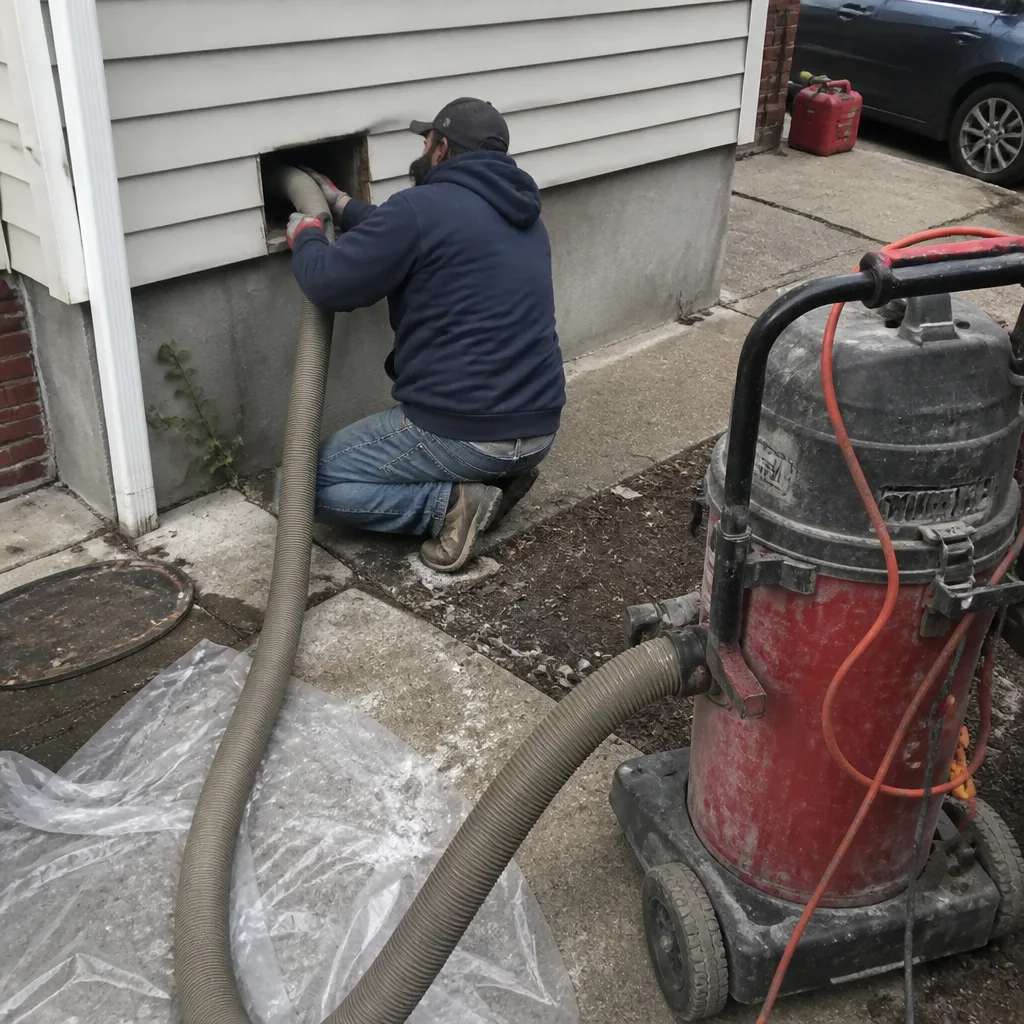 Before
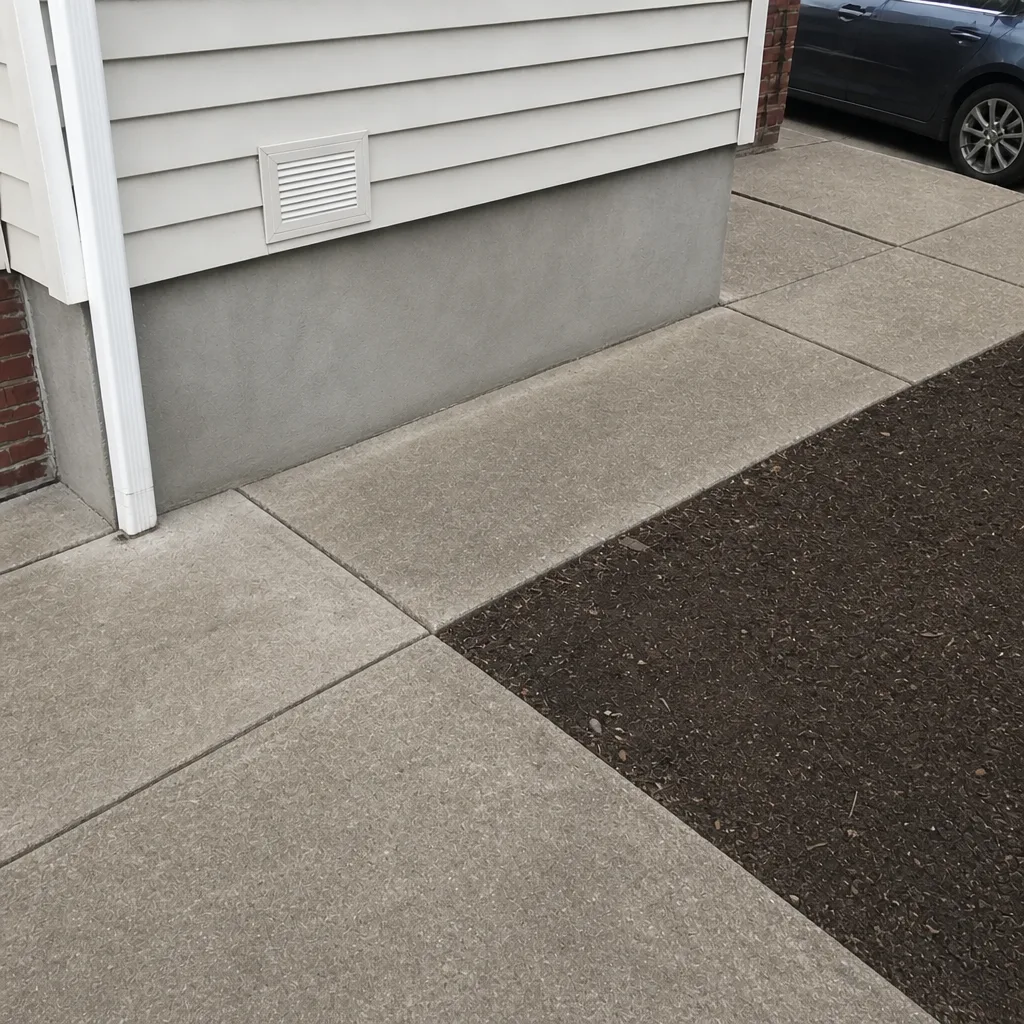 After
When to Call a Professional
Some dust buildup is a maintenance task. Some is a symptom of a duct system problem that needs a trained technician with proper equipment. Call a professional when you’re noticing visible dust settling on surfaces within a day or two of cleaning, when a room stays hotter or colder than the rest of the house, when someone in the household is reacting to dust after a system change, or when you’re moving into a home and don’t know the last time the system was cleaned. Call before you install a new filter or air quality product too, because cleaning first is what makes filtration work. In Jersey City, where building stock varies widely and mechanical spaces can be tight, an inspection-first approach matters. Duct Cleaning Jersey City offers free estimates in Jersey City by call to (844) 834-2949. We answer 24/7. Fast dispatch from 7am to 7pm, Sunday through Friday.
Frequently Asked Questions
In our experience, whole-system air duct cleaning in the Jersey City market typically runs in the range of a few hundred dollars, and the written estimate sets the final price. We don’t quote per-vent prices – a per-vent quote is exactly the kind of estimate that grows on site once the crew is inside. Ask for a flat price per system, agreed before work starts. Call (844) 834-2949 for an exact quote – estimates are free.
Cheaper quotes almost always reflect cheaper equipment and a narrower scope. A crew with a portable vacuum and a shop vac is not running the same system as a Rotobrush rotary brush paired with Abatement Technologies containment, and the difference shows inside the ducts. Ask what equipment comes with each quote, then compare. Call (844) 834-2949 for a quote that includes the equipment being used.
You know the work was done when you receive before-and-after photos of your own ducts, taken on-site and labeled with the area cleaned. That’s the standard we work to. A receipt proves a payment, not a service. Ask any contractor you’re considering to show you the documentation they’ll produce. Call (844) 834-2949 to discuss what documentation comes with the job.
For most Jersey City homes, every few years is the common recommendation, and homes with pets, recent renovation, or a long-running dusty system may need it sooner. If you’ve noticed dust settling quickly after cleaning or a persistent musty smell, a cleaning is overdue regardless of the calendar. Call (844) 834-2949 for an assessment on your building.
It matters more than almost any other factor in the hiring decision. A rotary brush and commercial vacuum from a manufacturer like Nikro or Rotobrush move far more debris out of the system than generic tools, and containment equipment from Abatement Technologies keeps what’s loosened inside the filter rather than in your living room. Ask to see the equipment before work starts. Call (844) 834-2949 with the equipment question and we’ll give you a straight answer.
Repair is a separate service and worth having under one provider. If a duct run has a separated joint, a crushed section, or an unsealed seam, cleaning alone won’t fix it and the dust returns. A specialist that offers air duct repair as a standalone service can diagnose the structural issue and perform the fix. Call (844) 834-2949 to have your system inspected before booking a clean.
The Bottom Line
When you’re looking for the best air duct cleaning company in Jersey City, compare equipment first, price second. The brand of rotary-brush system, the vacuum pulling the debris out, the containment keeping it inside the filter, and the ability to repair what’s broken all predict job quality far more reliably than a logo or a coupon. Use the four questions in this guide before you hire. Ask what equipment is coming, ask to see it, ask how the work is verified, and ask what happens if the inspection turns up a repair. The company that answers all four is the one worth calling. The company that deflects is the one worth skipping. Our technicians have up to 10 years of experience with the professional systems we run, and we’re glad to walk through what a job on your building looks like.
Written by the team at Duct Cleaning Jersey City.