
Last updated November 15, 2026
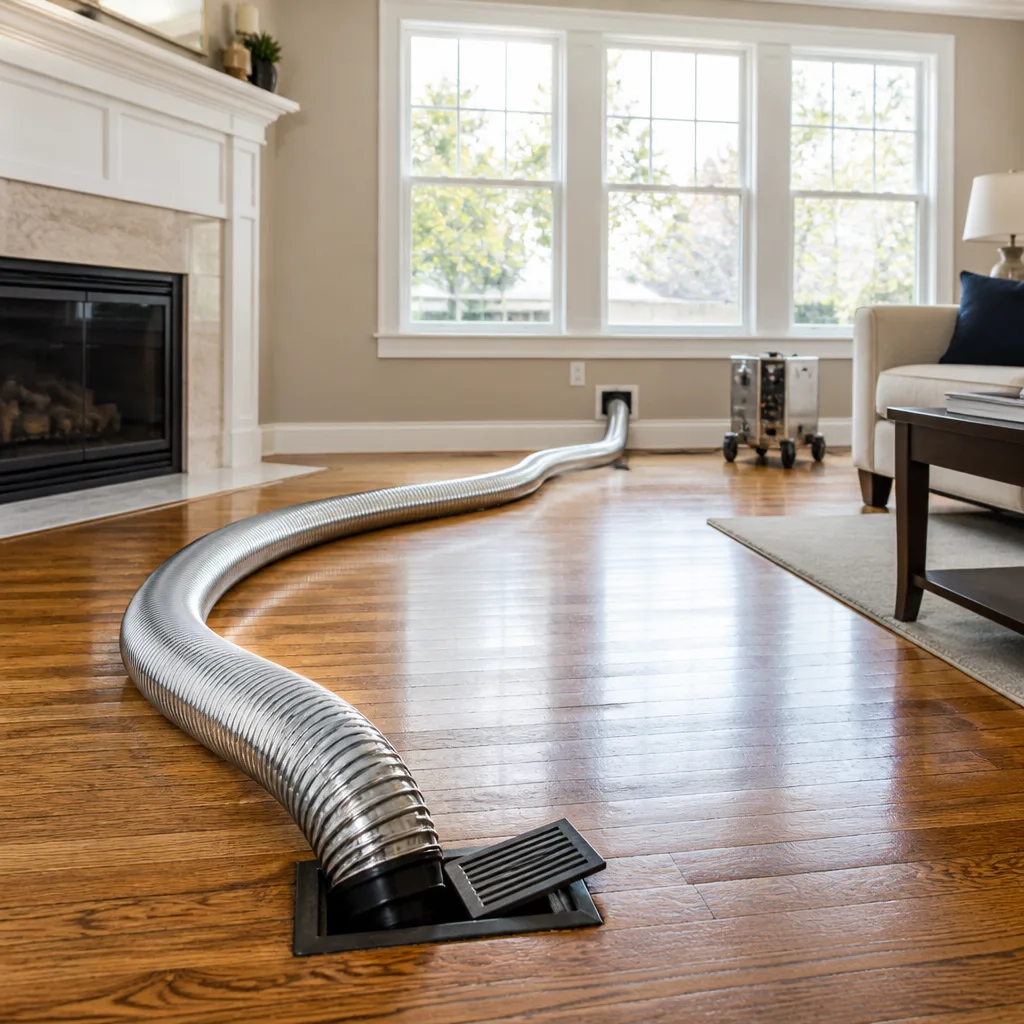 Whole-home duct cleaning
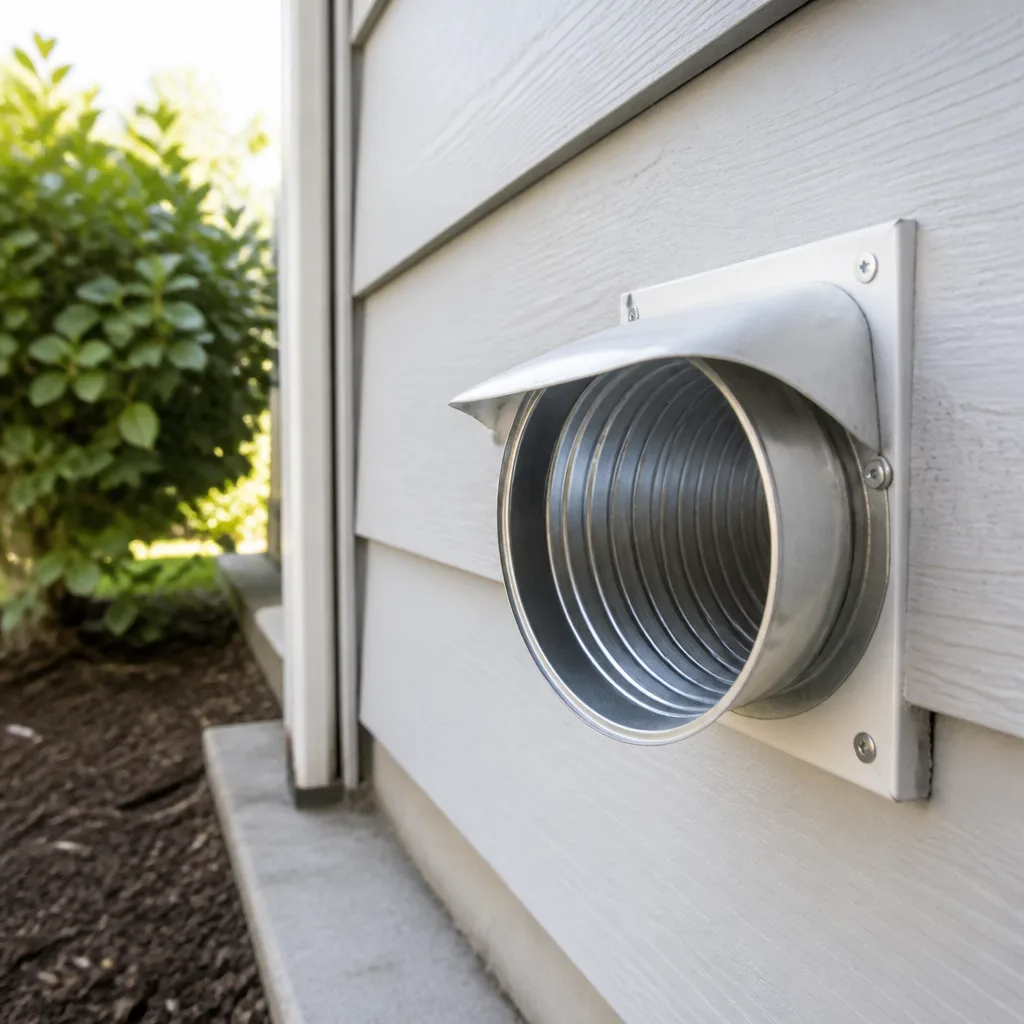 Dryer vent cleaning
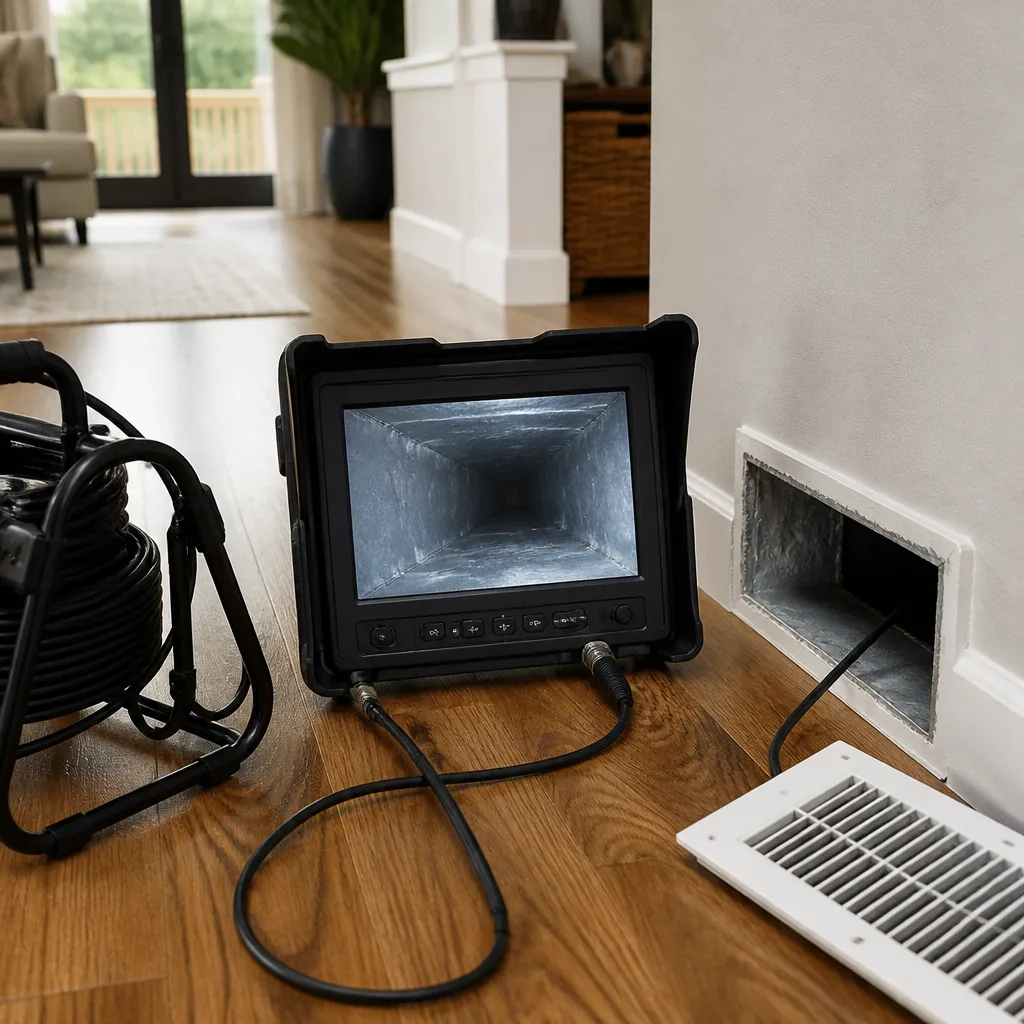 Camera inspection
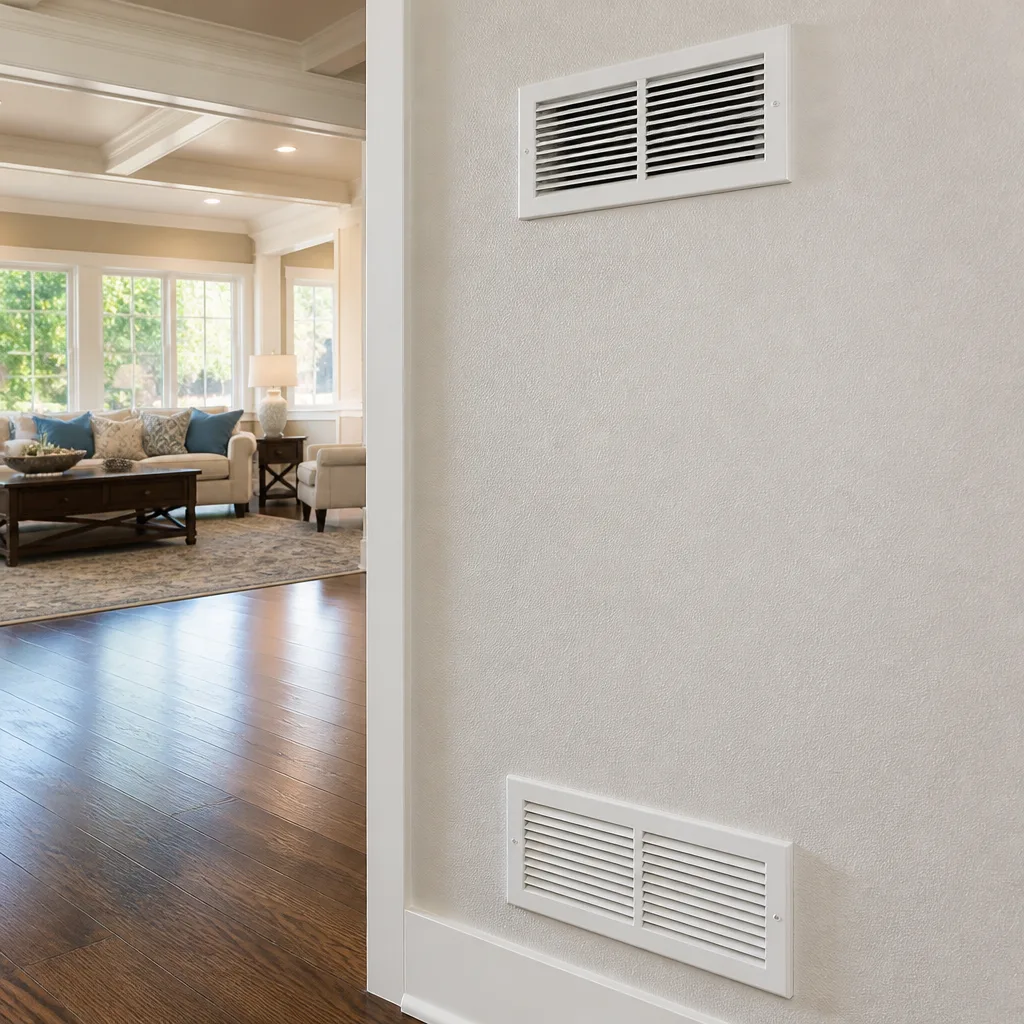 Sanitizing & deodorizing
Whole-system duct and dryer vent check with before-and-after photos - you see exactly what came out of your vents
That "$99 whole-house special" is a bait ad - the real number appears once they are in your hallway, or the "clean" is a shop-vac at the register. We photograph the inside of your ducts before and after instead.
Air Duct Cleaning Cost Breakdown: The Jersey City Homeowner’s Reference for 2026
A $149 whole-house duct cleaning quote in Jersey City in 2026 covers roughly the contractor’s gas money – and not much else. That’s the uncomfortable starting point for this guide. Duct cleaning pricing in Jersey City swings by as much as 400% between providers, and the spread isn’t random. It maps directly to equipment level, crew size, and whether the contractor intends to do source removal or surface theater. This reference breaks down every line item so you can tell the difference between a fair price and a profitable shortcut, from brownstone duct access to finished-basement air handlers.
Quick Answer
Air duct cleaning in Jersey City in 2026 typically costs $450 to $900 for a standard single-family home, and $1,200 to $2,800 or more for a multi-unit building, depending on vent count, duct configuration, and access. A legitimate job uses professional-grade negative-air containment and rotary-brush equipment, is priced per system rather than per vent, and should never come in under about $350 for a real whole-house cleaning. The written estimate sets the final price.
Styles & brands we work with
- Whole-home duct cleaning
- Dryer vent cleaning
- Camera inspection
- Sanitizing & deodorizing
Table of Contents
- Cost-Per-Vent vs. Whole-System Pricing
- What Drives Price Variation in Jersey City
- How Equipment Level Legitimately Affects Price
- Fair 2026 Price Ranges by Home Type
- Legitimate Add-Ons vs. Upsells That Don’t Deliver
- Why Some Quotes Are So Much Cheaper
- How to Verify the Work Was Actually Done
- Common Mistakes to Avoid
Cost-Per-Vent vs. Whole-System Pricing: Which Is More Transparent?
Whole-system pricing is more transparent because it forces the contractor to quote the actual scope up front instead of letting the final number balloon as vents are counted on site. Cost-per-vent pricing looks simple, but it hides the real variables – duct length, number of returns, access difficulty – inside a per-vent multiplier that can swing either direction once the technician is in your basement.
Here’s the problem with the per-vent model. A Jersey City brownstone might have 14 registers and a single central return, while a newer townhome a few blocks away has 18 registers and three returns. Per-vent pricing treats those as barely different jobs. They aren’t. The return-side work, the main trunk runs, and the air handler cabinet are where most of the labor lives, and per-vent math mostly ignores them.
Flat-rate, whole-system quotes have their own trap: a low flat rate with no line items is just a different kind of bait. To validate a flat-rate quote, ask what’s included:
- How many supply and return runs are being cleaned.
- Whether the air handler cabinet and blower compartment are included.
- Whether the quote covers the supply side, the return side, or both.
- Whether containment equipment is part of the job.
- Whether a before-and-after photo record is provided.
A contractor who can answer those five questions in writing is quoting a real scope. One who can’t is quoting a number. When we price a system, we quote the whole thing – one flat price per system, agreed before work starts, with no per-vent add-ons appearing later. That’s the model that protects you, and it’s why we handle air duct cleaning as a system job rather than a vent count.
What Drives Price Variation in Jersey City Specifically?
Duct access is the single biggest price driver in Jersey City, and it has almost everything to do with building age and layout. A brownstone with original plaster walls and ducts running through tight chases takes longer to reach, contain, and clean than a newer townhome with accessible flexible duct in a drop ceiling. That labor difference is real, and it shows up in the estimate.
The local housing stock creates predictable patterns:
- Brownstones and row houses: Original ductwork, tight chases, and sometimes ducts that share a wall cavity with a neighbor. Access takes time, and containment matters more than usual.
- Multi-story walk-ups: Registers on three or four floors mean the technician is moving equipment up and down, and negative-pressure setup needs to account for each level.
- Finished basement HVAC rooms: The air handler is often boxed in behind finished walls. Getting to the plenum and blower compartment can mean more careful setup, and the quote should reflect that.
- Newer waterfront and downtown high-rises: Shared mechanical systems and building-management access rules can add coordination time.
Climate plays a supporting role. Jersey City summers are humid, and a cooling system that runs hard all summer pulls more dust and moisture through the return side. Homes here also tend to run heat and air conditioning with the windows closed for long stretches, which concentrates whatever’s in the ducts. That’s not a pitch for more frequent cleaning – it’s a reason the return-side cleaning matters, and it’s why a contractor quoting a quick surface pass isn’t quoting the same job as one who cleans both sides of the system. If you want to understand the full scope before you price it, start with duct cleaning in Jersey City and read what the job actually involves.
How Equipment Level Legitimately Affects Price
Professional-grade equipment is the main reason good duct cleaning costs what it costs – and the reason a $149 quote can’t be the same job. You cannot do source removal with a shop vac and a promise. The price gap between a legitimate quote and a cheap one maps almost entirely to what the contractor brings to the address.
A real setup for a Jersey City job includes:
- Rotobrush rotary-brush cleaning systems to agitate and lift debris from duct walls rather than just blowing it around.
- Nikro professional cleaning equipment for the reach and suction the job needs.
- Negative-air containment using Abatement Technologies equipment – the same category of machine used in remediation work – so loosened debris is captured instead of redistributed into your living space.
- Guardsman-grade cleaning products from professional supply channels, not off-the-shelf substitutes.
Compare that to a portable unit and a shop vac. The portable setup is cheaper for the contractor to own, cheaper to run, and produces a different result. It can knock loose surface dust. It cannot do the negative-pressure containment that keeps debris out of the room, and it cannot generate the air volume that pulls embedded material off duct walls. That’s the honest difference between a $149 job and a $600 job – not markup, equipment and scope.
The same principle applies to dryer vent cleaning, where lint removal is a fire-safety job and the equipment has to reach the full run. Professional-grade tools are the reason the work is done right, and they’re the reason a price is what it is.
What’s a Fair 2026 Price Range for Your Home Type?
These are typical ranges, not quotes. The written estimate sets the final price, and access, vent count, and whether repair work is needed will move the number. Use these as a sanity check on any quote you receive.
| Home Type | Typical Scope | Estimated 2026 Range |
|---|---|---|
| Single-family, one system | Supply and return, air handler cabinet, containment | $450 – $900 |
| Townhome, two systems | Two air handlers, all supply and return runs | $850 – $1,500 |
| Brownstone, one system | Tight-chase access, plaster walls, full containment | $600 – $1,200 |
| Multi-unit building (2-4 units) | Per-unit systems, coordination, multiple air handlers | $1,200 – $2,800 |
| Add: dryer vent cleaning | Full-run lint removal | $125 – $225 |
| Add: air duct repair | Sealing, reconnecting, replacing compromised sections | Quoted per repair |
Scope assumptions matter. These ranges assume the ducts are intact, the air handler is accessible, and no repair work is needed beyond standard cleaning. If a technician finds disconnected flex runs, crushed sections behind a finished wall, or a plenum that’s been sealed shut, the repair gets quoted separately – and that’s a legitimate line on the estimate, not a surprise. A company that can diagnose and fix compromised ductwork is worth more than one that cleans around the problem and leaves it. If you’re weighing providers, Jersey City has enough variety that comparing three written estimates is worth an afternoon.
Legitimate Add-Ons vs. Upsells That Don’t Deliver
Some add-ons are genuine parts of a good job. Others are margin vehicles that rarely deliver proportional value. Knowing which is which keeps you from paying for theater.
Legitimate add-ons:
- Coil cleaning: The evaporator coil sits in the air handler and collects dust that the filter misses. Cleaning it alongside the ducts is a real improvement to airflow and efficiency.
- Dryer vent cleaning: A separate system with a real safety reason to clean it. Lint buildup in the vent run is a fire hazard, and this is a job worth doing on its own schedule.
- Sanitizing the duct system: Genuine when there’s biological growth or odor, and worth it when the cleaning uncovers a problem. Both Honeywell and Aprilaire products play a role in ongoing air-quality control after cleaning, which is when an add-on earns its price.
- Air duct repair: Reconnecting or sealing compromised runs is core work, not an add-on. If it’s needed, it belongs in the estimate.
Upsells that rarely pay off:
- Enzyme fogging on a system with no odor or growth problem.
- Anti-microbial coatings applied over ducts that haven’t been cleaned yet.
- UV lights sold as a cleaning substitute – they don’t remove debris.
- Repeated “deep clean” tiers that just mean the same job at a higher number.
A fair contractor will tell you which add-ons your system actually needs, and will say no to the ones it doesn’t. That’s the standard worth holding anyone to.
Why Are Some Quotes So Much Cheaper?
A cheap quote is cheaper because the scope is smaller, the equipment is lighter, or the price is designed to grow once the technician is inside your home. The $149 whole-house quote in Jersey City covers roughly the contractor’s gas money. It cannot cover a two-person crew, containment setup, and proper source removal – so something in that job is being skipped or made up for later.
Common patterns behind low quotes:
- The bait-and-switch: A teaser price gets the appointment booked, then the technician finds “problems” on site and the invoice grows well beyond the quote. The homeowner is already invested and the pressure is on.
- Surface theater: A quick pass with a shop vac and a blower that stirs up debris without containing it. The visible registers look cleaner and the ducts aren’t.
- Per-vent creep: A low per-vent number that multiplies once every register on every floor is counted.
- No containment: Skipping the negative-air setup saves the contractor time and equipment cost and puts the debris into your living room instead of the machine.
- Unlicensed or unbonded operators: Cheaper to run because the overhead of proper licensing and insurance isn’t there.
None of that means the most expensive quote is the right one either. It means the price has to match a scope you can verify. Ask for the line items, ask what equipment is being used, and ask for before-and-after photos of your own ducts. A legitimate operator will answer all three without hesitation.
How Do I Know the Work Was Actually Done?
Before-and-after photos of your own ducts are the simplest verification, and any honest contractor should provide them as standard. Short of crawling into the ductwork yourself, visual evidence from inside the system is the only way to confirm that debris came out rather than just moving around.
Here’s what a verifiable job looks like:
- Photo record: Images from inside the supply and return runs, taken before and after cleaning.
- Containment visible during the job: Negative-air equipment connected to the system, not a shop vac on the floor.
- Debris captured, not released: The machine collects material. Your furniture and floors should look the same after the crew leaves as before.
- The air handler opened and cleaned: The blower compartment and plenum are part of the job, not skipped for time.
- A written scope before work starts: One flat price per system, agreed in advance, with no surprise line items at the end.
If any of those are missing, the work is hard to verify – and that’s the whole point. A customer who gets their answer and their evidence stays satisfied. A customer who’s left wondering whether anything happened doesn’t.
Common Mistakes to Avoid
- Booking on price alone without asking about equipment. If the contractor can’t name the system they’re bringing to the address, the price is a guess and the job is a gamble.
- Accepting a per-vent quote without a whole-system scope. A per-vent number looks comparable across bids and usually isn’t. Ask for the supply and return counts in writing.
- Assuming a brownstone job is like a townhome job. The tight-chase access and plaster construction in older Jersey City homes take real setup time. A quote that doesn’t account for that is quoting a different house.
- Letting a technician upsell sanitizing on a system that hasn’t been cleaned yet. Cleaning comes first; add-ons come after the cleaning reveals what’s actually in the ducts.
- Skipping the dryer vent because the ducts are being cleaned. They’re separate systems. Lint in the vent run is a fire risk and won’t be addressed by a duct cleaning.
- Not asking for before-and-after photos. It’s the cheapest verification you’ll ever get. Ask before you book, so there’s no dispute later.
- Forgetting the air handler. The blower compartment and cabinet collect debris too. A quote that skips them isn’t a full-system cleaning.
See the difference
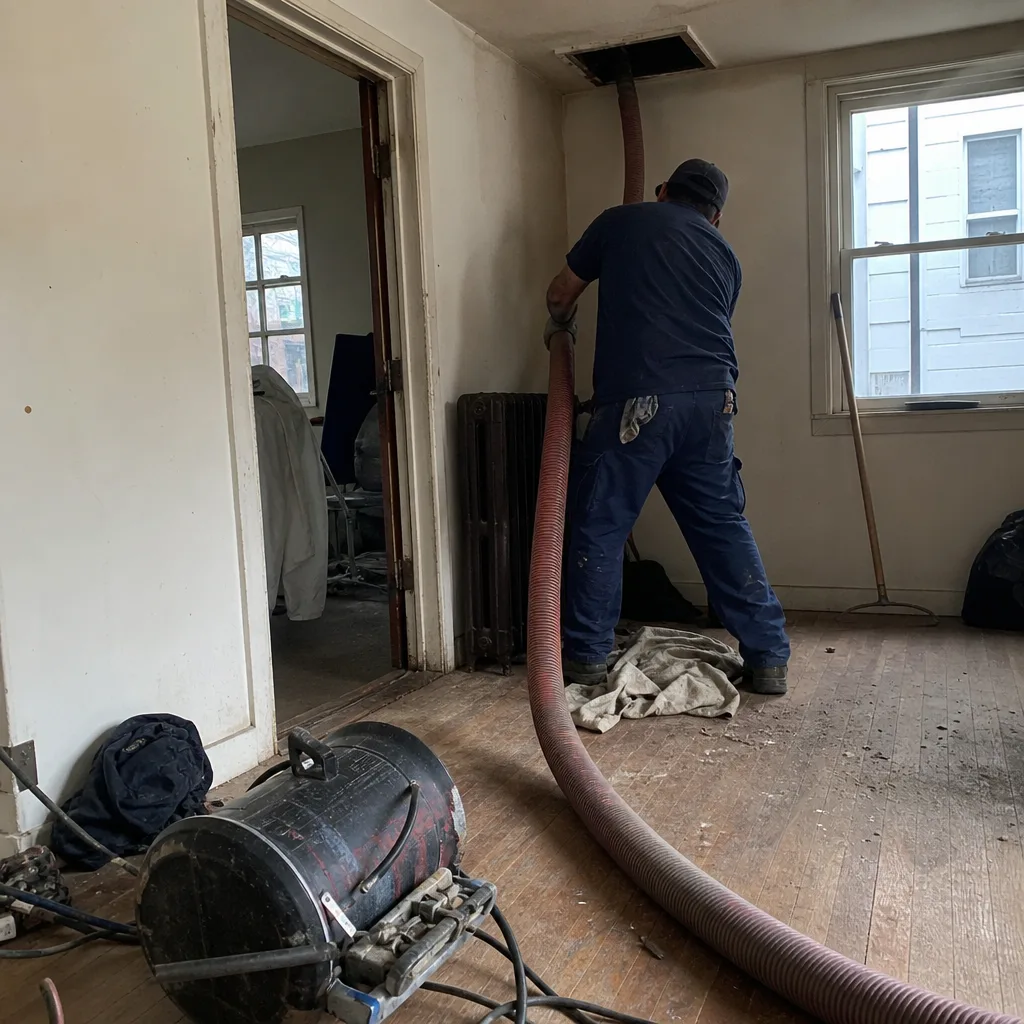 Before
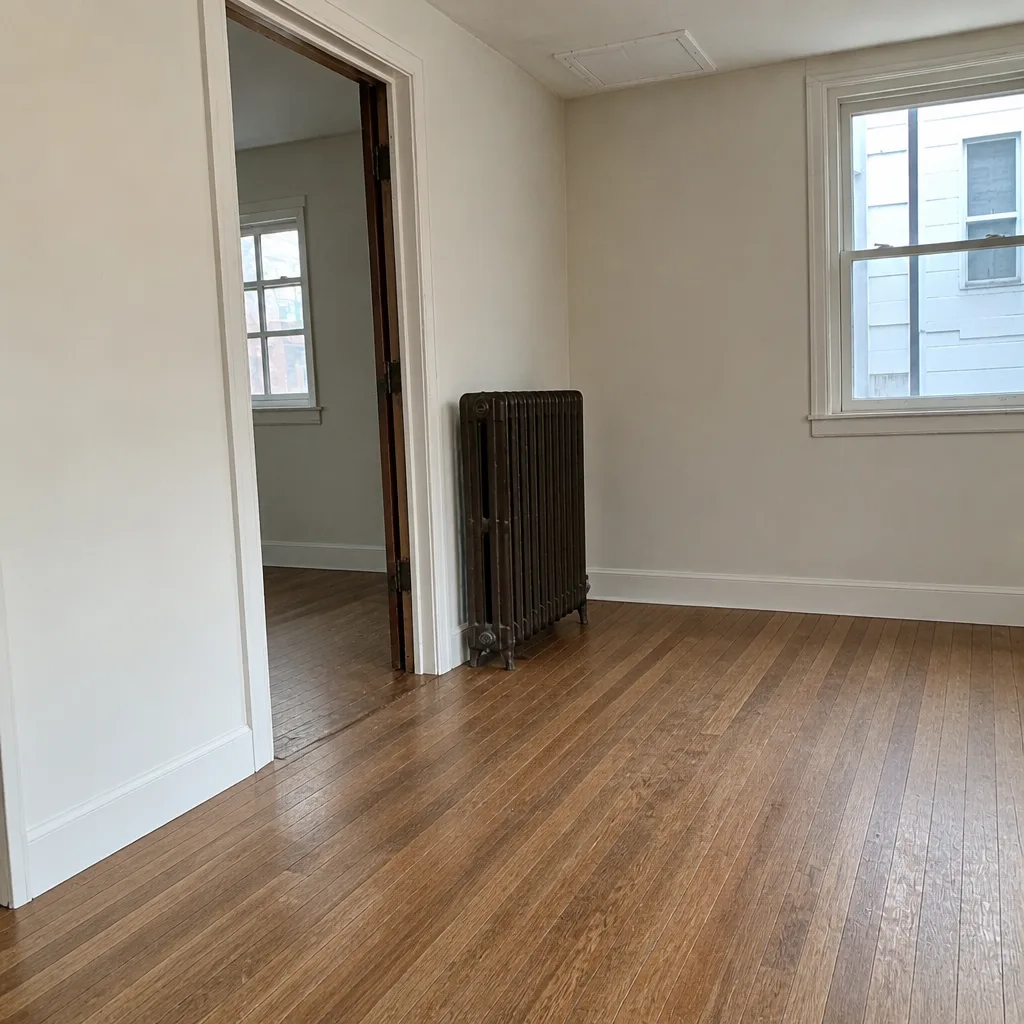 After
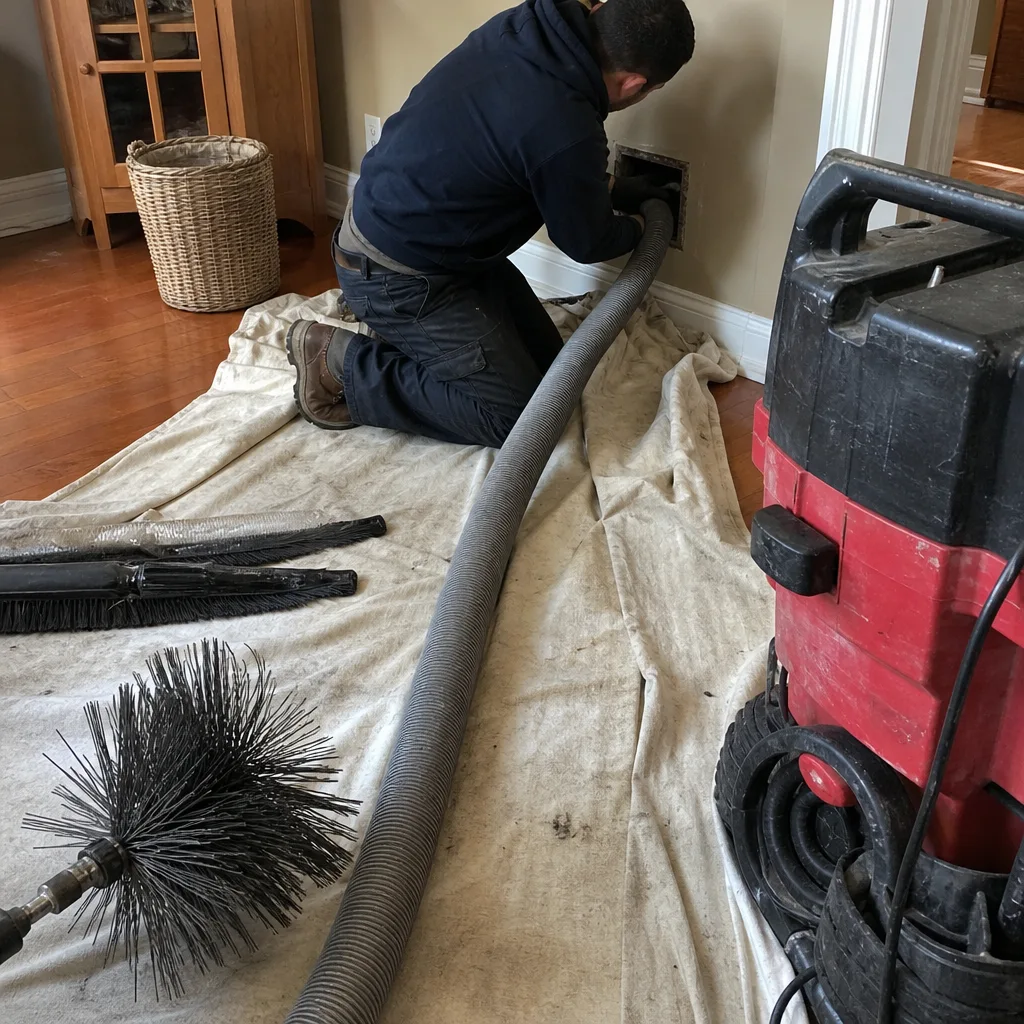 Before
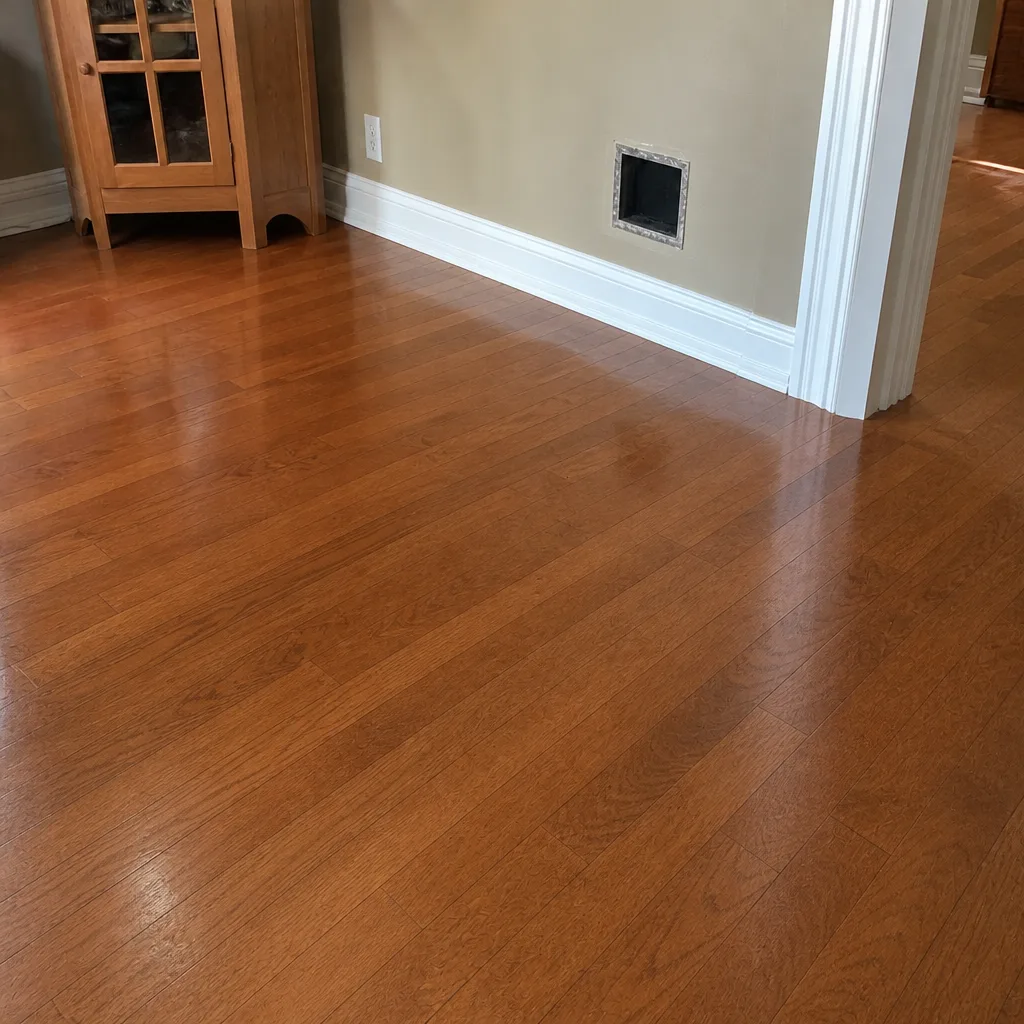 After
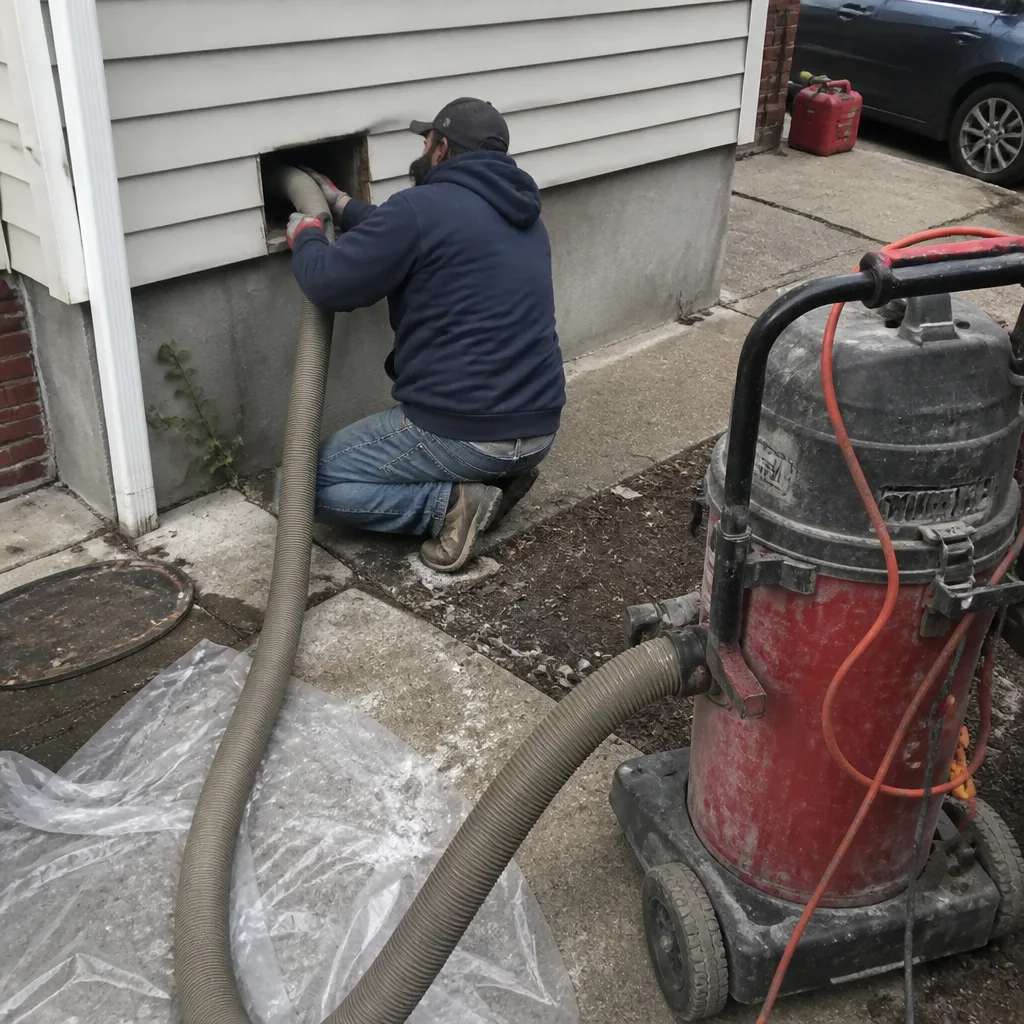 Before
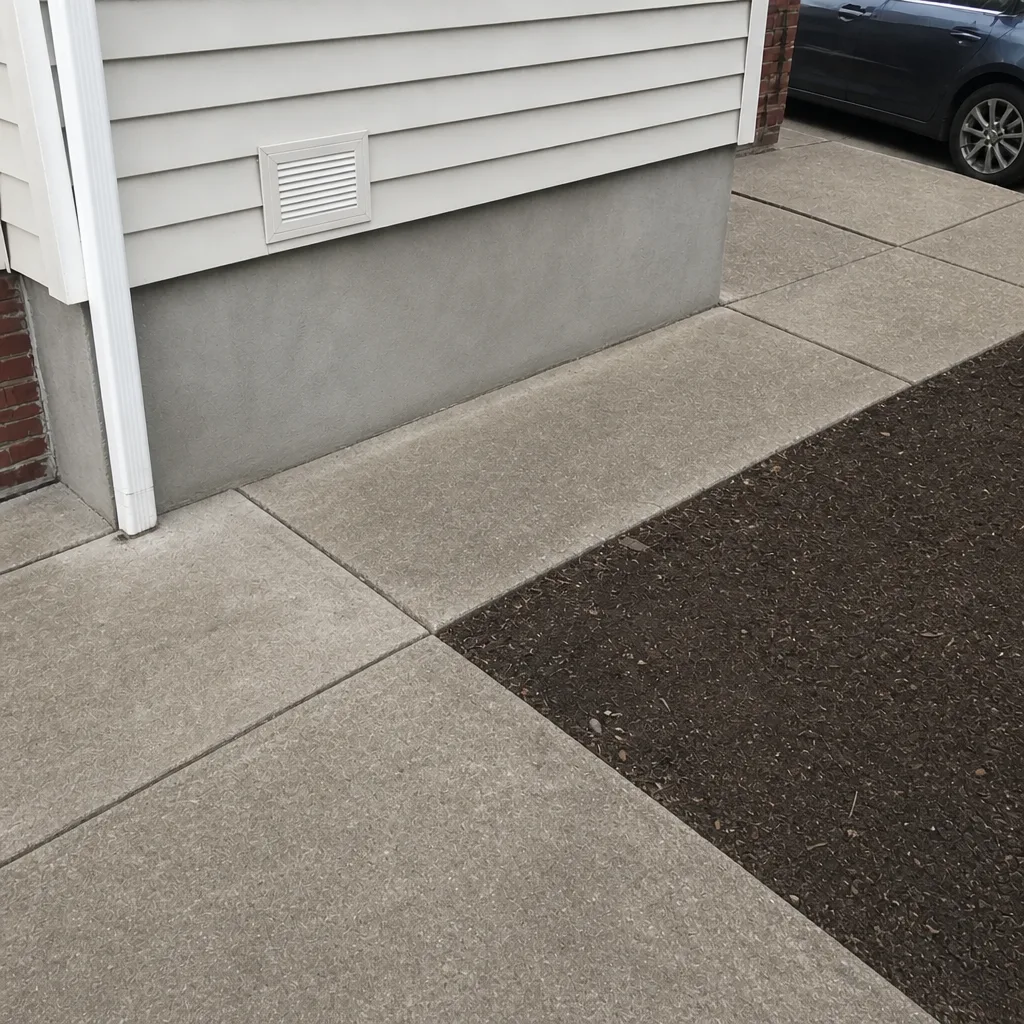 After
When to Call a Professional
Call when you notice visible dust blowing out of registers shortly after a filter change, when the airflow in part of the house has dropped, when musty odor shows up each time the system starts, or when you’ve just moved into a Jersey City home and don’t know the last time the ducts were cleaned. Call if a renovation left construction dust in the system, or if the dryer is taking longer to dry clothes than it used to. And call if your existing quote doesn’t include a written scope, containment equipment, or before-and-after photos. Duct Cleaning Jersey City offers free estimates in Jersey City – call (844) 834-2949. We answer 24/7. Fast dispatch from 7am to 7pm, Sunday through Friday.
Frequently Asked Questions
Air duct cleaning in Jersey City typically runs $450 to $900 for a standard single-family home and $1,200 to $2,800 or more for a multi-unit building, depending on vent count, access, and scope. A fair quote covers supply and return runs, the air handler cabinet, and containment equipment. Call (844) 834-2949 for an exact quote – estimates are free.
The cheapest quotes are cheap because the scope is smaller, the equipment is lighter, or the price is designed to grow once the technician is on site. A $149 whole-house quote covers roughly the contractor’s gas money and nothing else. Ask what equipment is used and get the scope in writing. Call (844) 834-2949 – estimates are free.
Most homes can go several years between cleanings, and many go longer; there’s no universal schedule. Frequency depends on whether you have pets, whether anyone in the house has allergies, whether there’s been a renovation, and how well the filter is maintained. A cleaning should be a response to evidence – dust, odor, reduced airflow – not a calendar reminder. Call (844) 834-2949 if you’re unsure whether it’s time.
Yes. Registers on multiple floors mean more setup and more time, and each air handler is its own system. Brownstones and walk-ups typically cost more to clean than single-level homes because of access and containment on each level. Call (844) 834-2949 for a quote based on your actual layout – estimates are free.
Ask for before-and-after photos from inside your own ducts, and watch for containment equipment set up during the job. A contractor who provides both is showing you evidence, not asking you to take their word. Call (844) 834-2949 to book a job where the photos come standard.
It’s worth it when there’s a reason – visible dust, musty odor, recent renovation, or a system that’s never been cleaned in a home you just bought. It’s not worth it as a routine purchase with no symptoms. Judge the price against a real scope, not against the cheapest number. Call (844) 834-2949 for an honest assessment – estimates are free.
The Bottom Line
Duct cleaning pricing in Jersey City in 2026 tracks equipment, scope, and honest quoting. A real job uses professional-grade rotary-brush and containment equipment, is priced by system rather than by vent, and comes with before-and-after photos. A $450 to $900 single-family job is fair when the scope covers supply, return, and the air handler. A $149 quote isn’t a discount – it’s a different job. Ask three questions of any contractor: what equipment, what scope, and what evidence. The answers will tell you which quote is real. The written estimate sets the final price.
Call Duct Cleaning Jersey City at (844) 834-2949 for a free estimate. We answer 24/7. Fast dispatch from 7am to 7pm, Sunday through Friday. Licensed and insured, one flat price per system agreed before work starts, and photos of your own ducts before and after. Our technicians have up to 10 years of experience, and we use Rotobrush, Nikro, Abatement Technologies, and Guardsman-grade products – the equipment the trade actually trusts.
Written by the team at Duct Cleaning Jersey City.